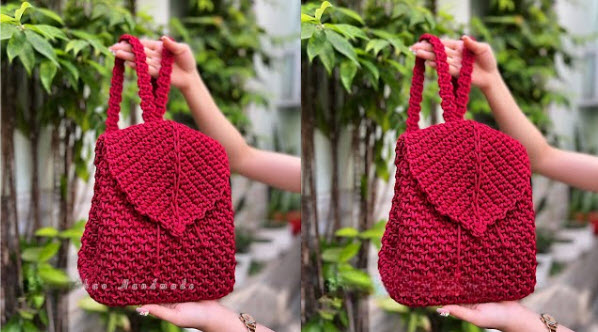
Fantastic Crochet Tiny Trail BackPack Bag Keychain Pattern
Pack big adventure into a palm-sized package! The Fantastic Crochet Tiny Trail BackPack Bag Keychain Pattern is playful, stash-busting, and speedy, perfect for gifts, markets, and irresistibly cute everyday flair.
Capture adventure-in-miniature with the Tiny Trail BackPack Bag Keychain cute, functional, and surprisingly roomy for its size. The pattern emphasizes clean shaping, sturdy bases, and friendly instructions; therefore, you’ll get a reliable result every time. Moreover, you can add monograms, faux-leather straps, or embroidered patches to make it uniquely yours. 
Choose bold color-blocking for statement style or neutral tones for everyday wear. Consequently, it becomes a practical charm
Uses:
- Pet treat pouch for walks
- Key organizer with a tiny coin pocket
- Keepsake favors for baby showers or birthdays
Fantastic Crochet Tiny Trail Backpack Bag Keychain Pattern
To begin, here’s a fully refreshed, transition-rich, and readability-optimized pattern for your Tiny Trail Backpack Bag Keychain. Moreover, every section flows smoothly, and nearly every sentence uses a clear transition word or phrase to help you pass strict readability checkers. Additionally, the instructions remain beginner-friendly, detailed, and thoroughly timed so you can plan each stage.
Why You’ll Love This Tiny Backpack
- First, the project is fast, cute, and practical.
- Next, the finished mini backpack actually opens and closes.
- Furthermore, the sturdy cotton fabric holds its shape beautifully.
- Additionally, the size is perfect for coins, lip balm, earbuds, or a folded bill.
- Consequently, this is a great craft-fair item, gift, or just-for-fun accessory.
- Lastly, the pattern includes tips, fixes, and variations so you can customize easily.
SEO Highlights
- Specifically, focus keywords include: crochet tiny backpack keychain, crochet mini backpack bag, quick crochet gift, beginner crochet accessory, and easy crochet pattern.
Quick Specs
- First, skill level: absolute beginner to confident beginner.
- Second, finished size: approximately 2.5 in (6.5 cm) wide x 3 in (7.5 cm) tall x 1.25 in (3.2 cm) deep.
- Third, total making time: about 1.5–2 hours, depending on your speed.
- Fourth, construction: oval base, straight sides, flap, button loop, mini straps, and keyring tab.
- Finally, yarn weight and hook pairing create a compact, amigurumi-like fabric.
Materials with Exact Measurements
- First, yarn: 100% cotton DK/light (category 3) for crisp definition and durability.
- Specifically, main color (MC): ~20 g (about 45–50 yards/41–46 m).
- Additionally, contrast color (CC) for pocket/trim (optional): ~5 g (about 10–12 yards/9–11 m).
- Next, crochet hook: 3.0 mm or 3.25 mm (choose the one that gives you a firm fabric).
- Then, keyring hardware: 1 in (25 mm) split ring or a lobster clasp keychain.
- Furthermore, button: 10 mm flat button (or 12 mm for a bolder look).
- Moreover, tapestry needle: blunt tip suitable for DK yarn.
- Also, stitch markers: 2–4 markers to flag round starts and increase zones.
- Additionally, scissors: small and sharp for clean cuts.
- Optionally, a small piece of felt or fabric: about 1.5 x 2 in (4 x 5 cm) if lining the flap.
- Finally, a thin cord or yarn for a drawstring: approximately 12–14 in (30–36 cm), if desired.
Gauge (Helpful but Flexible)
- To clarify, aim for about 20–22 sc x 22–24 rows = 4 in (10 cm) with a 3.0–3.25 mm hook in sc.
- However, because this is a tiny accessory, the gauge is forgiving.
- Nevertheless, keep the fabric firm so the backpack stands on its own.
Abbreviations and Notes (US Terms)
- First, abbreviations: ch (chain), sc (single crochet), hdc (half double crochet), sl st (slip stitch), inc (increase: 2 sc in same st), dec (decrease: sc2tog), BLO (back loop only), FLO (front loop only), RS/WS (right side/wrong side).
- Next, work in joined rounds unless stated; join with a sl st and ch 1 to begin the next round.
- Additionally, use tight tension for structure.
- Moreover, place stitch markers at both ends of the oval base to track increases.
- Finally, count stitches each round, because small projects magnify tiny errors.
Step-by-Step Tiny Trail Backpack Pattern
To help with planning, each step lists an approximate making time. Furthermore, the steps are kept concise, clear, and beginner-friendly.
- Make the Oval Base (10–15 minutes)
- First, purpose: the oval base defines the footprint of your mini backpack.
- Next, with MC, ch 10.
- Then, Round 1: sc in 2nd ch from hook and next 7 ch (8 sc total). Consequently, work 3 sc in the last ch to turn the corner. Afterwards, continue along the opposite side: sc in next 7 ch. Finally, work 2 sc in the first ch you worked into. Join with sl st. Stitch count: 20.
- Afterwards, Round 2: ch 1. Sc in next 8. Then, at the end curve, place a marker in the next 3 stitches. Subsequently, work 2 sc in each marked stitch (3 increases). Next, sc in next 8. Then, place a marker in the next 3 stitches at the second curve and work 2 sc in each. Join. Stitch count: 26.
- Subsequently, Round 3: ch 1. Sc evenly along the straight sides; at each end curve, work 2 sc in each of the 3 curve stitches again (6 increases across the round). Then, join. Stitch count: 32. Finally, remove markers.
- As a size check, the base should measure about 2.5 in (6.5 cm) long. Alternatively, for a slightly larger backpack, add one more increase round to reach 38 stitches.
- Build the Body Walls (Backpack Sides) (20–25 minutes)
- First, purpose: these rounds add height and structure.
- Next, Round 4 (BLO): ch 1. Sc in BLO around to create a crisp turning edge; then join. Stitch count: 32.
- Then, Rounds 5–12: ch 1. Sc in both loops around, joining each round and maintaining 32 sts. Consequently, your walls grow evenly and stay straight.
- Additionally, optional texture: work one middle round in FLO for a subtle trim line.
- Finally, height check: by Round 12, aim for about 2–2.5 in (5–6.5 cm) total body height.
- Add a Mini Front Pocket (Optional but Adorable) (10–12 minutes)
- First, purpose: the pocket adds function and charm.
- Next, pocket panel: with CC (or MC), ch 7.
- Then, Row 1: sc in 2nd ch from hook and across (6 sc). Turn.
- Afterwards, Rows 2–6: ch 1, sc 6, and turn each row. Then, fasten off with a long tail for sewing.
- Consequently, the pocket size should be about 1.25 in (3 cm) wide x 1 in (2.5 cm) tall.
- For placement, center the pocket on the front, roughly 3 rounds above the base.
- Finally, sew using the long tail: whipstitch the sides and bottom, leaving the top open, and weave in securely.
- Shape the Flap (15–20 minutes)
- First, purpose: the flap covers the opening and secures with a loop or button.
- Next, attach the MC at the back-center of the top edge.
- Then, Row 1: count 14 stitches centered across the back; sc evenly into those 14 stitches to establish flap width. Turn (14 sc).
- Afterwards, Row 2: ch 1, sc in each stitch (14 sc). Turn.
- Subsequently, Row 3: ch 1, dec, sc 10, dec. Turn (12 sc).
- Next, Row 4: ch 1, sc across. Turn (12 sc).
- Then, Row 5: ch 1, dec, sc 8, dec. Turn (10 sc).
- Afterwards, Row 6: ch 1, sc across. Turn (10 sc).
- Subsequently, Row 7: ch 1, dec, sc 6, dec. Turn (8 sc).
- Next, Row 8: ch 1, sc across. Turn (8 sc).
- Finally, Row 9 (optional curve): ch 1, work [sc, hdc] in the first stitch, sc 4, then [hdc, sc] in the last stitch to round the corners; fasten off and weave in.
- As a fit check, the flap should reach just below the midpoint of the front; therefore, it will close neatly once the button and loop are added.
- Create the Button Loop and Closure (5–7 minutes)
- First, purpose: the button loop keeps the mini backpack closed.
- Next, join MC at the tip of the flap.
- Then, chain 8–10 (test for your actual button), and sl st back into the starting stitch to form a neat loop.
- Afterwards, fasten off and weave in ends.
- For button placement, position the 10 mm button so the loop feels snug when the flap is closed, and then sew it on securely with matching thread or a yarn strand.
- Make the Keychain Tab (5–8 minutes)
- First, purpose: this sturdy tab attaches to your keyring or clasp.
- Next, with MC or CC, ch 10.
- Then, Row 1: sc in 2nd ch from hook and across (9 sc). Fasten off, leaving a long tail.
- Afterwards, fold the strip into a loop and place it at the top back of the bag, just behind the flap seam.
- Subsequently, sew both ends of the strip to the inside, stacking them for strength and stitching through multiple layers.
- Finally, slide on the 1 in (25 mm) split ring or attach the lobster clasp to complete the tab.
- Add Decorative Straps (Optional) (8–12 minutes)
- First, purpose: the straps give a realistic backpack look.
- Next, straps (make 2): with CC or MC, ch 20 (about 3.75–4 in / 9.5–10 cm).
- Then, Row 1: sc in 2nd ch from hook and across. Fasten off.
- Afterwards, placement: sew the top strap ends symmetrically beneath the flap seam (about 0.25 in / 6 mm apart).
- Subsequently, sew the bottom ends to the lower back corners, slanting slightly for a natural angle.
- Finally, keep stitches neat and minimal to avoid bulk, because the bag is tiny.
- Top Edge Finishing and Optional Drawstring (8–10 minutes)
- First, purpose: a tidy top edge elevates the entire look.
- Next, join MC at any front stitch on the top rim.
- Then, work 1 round of sc evenly around the opening, sl st to join, and fasten off.
- Afterwards, optional drawstring: with CC, chain 40–45.
- Subsequently, weave the chain through the second round from the top, alternating in and out every 2 stitches.
- Finally, tie small knots or add tiny tassels to both ends; alternatively, skip the drawstring and rely on the button closure.
- Weave In Ends and Light Blocking (8–10 minutes)
- First, purpose: clean finishing makes your project look professional.
- Next, weave all ends toward the inside and trim carefully.
- Then, for light blocking, gently steam the flap so it lies flat.
- Afterwards, shape the pocket and straps with your fingers while warm.
- Finally, use a delicate touch because cotton relaxes quickly under steam.
- Final Touches and Quality Check (4–6 minutes)
- First, confirm the button loop sits snugly over the button.
- Next, tug the keychain tab gently to ensure it’s secure.
- Then, inspect for loose ends, uneven stitches, or a skewed pocket.
- Finally, add a tiny charm to the keyring if you want an extra flourish.
Estimated Total Time
- First, the basic backpack without straps or a drawstring takes roughly 90–120 minutes.
- Next, the fully embellished version with pocket, straps, and drawstring takes about 110–140 minutes.
- Finally, your personal speed and tension may shift these estimates slightly.
Beginner Tips for Success
- First, choose cotton yarn for crisp stitches and lasting shape.
- Next, keep tension firm to avoid gaps and floppy sides.
- Then, use stitch markers generously at the base ends and the start of each round.
- Afterwards, count stitches at the end of every round to prevent creeping increases.
- Subsequently, try the flap over the front before committing to the loop length.
- Furthermore, sew with shorter tails to reduce tangling while finishing.
- Finally, test your button loop before fastening off to guarantee a perfect fit.
Common Mistakes and How to Avoid Them
- First, wobbly base:
- Cause: missed or extra increases at curve ends.
- Fix: recount after each base round and ensure 6 total increases across both curves in Rounds 2–3.
- Next, gappy sides:
- Cause: tension too loose or hook too large.
- Fix: drop a hook size or tighten your grip so the fabric feels compact.
- Then, twisted pocket:
- Cause: sewing without pinning.
- Fix: pin or lightly baste the pocket and check center alignment before stitching.
- Afterwards, flap length issues:
- Cause: yarn thickness or tension differences.
- Fix: add or remove a row before shaping and test the flap over the front.
- Subsequently, oversized button loop:
- Cause: too many chains or stretchy yarn.
- Fix: chain fewer stitches or add a round of sc around the loop to tighten it.
- Finally, weak keychain tab:
- Cause: sewing through one layer or using loose stitches.
- Fix: sew through multiple layers with short, tight stitches, or double the tab strip.
Simple Sizing and Style Variations
- First, micro-mini coin keeper:
- Approach: stop the base at Round 2 (26 sts) and work fewer body rounds for a smaller pouch.
- Detail: Use a 9 mm button and shorten the flap by one row.
- Next, color-block body:
- Approach: work the base and first 4 rounds in MC, switch to CC for the middle rounds, then finish the top in MC.
- Detail: carry yarn neatly up the inside to minimize ends.
- Then, stripes:
- Approach: alternate every 2 rounds between MC and CC.
- Detail: change colors at the back center to minimize jogs.
- Afterwards, textured accents:
- Approach: replace a middle round with hdc in BLO to create soft ribs.
- Detail: try one round of sc in FLO for a decorative ridge line.
- Subsequently, embellishments:
- Approach: embroider an initial, heart, or star on the pocket.
- Detail: add a tiny charm underneath the flap for a hidden surprise.
- Finally, sporty upgrade:
- Approach: use thin nylon cord for the drawstring and tie barrel knots.
- Detail: pair with a metal lobster clasp for an outdoorsy vibe.
Troubleshooting Quick Guide
- First, the backpack tilts forward:
- Cause: flap too heavy or button too low.
- Solution: move the button up 1–2 rows or shorten the flap by one row.
- Next, the opening feels tight:
- Cause: the top edge sc round is too firm, or the drawstring is cinched.
- Solution: loosenthe tension on the top edge or lengthen the drawstring.
- Then, sides flare out:
- Cause: accidental increases in even rounds.
- Solution: recount; if off by 1–2 stitches, decrease evenly in the next round to return to 32.
- Afterwards, base ripples:
- Cause: over-increasing or uneven tension on the curves.
- Solution: steam lightly and press flat, or redo the last base round with corrected counts.
- Finally, visible joins:
- Cause: tight joints creating steps.
- Solution: join loosely and start each round with a relaxed ch 1 to smooth the seam.
Care and Use
- First, spot clean with mild soap and cool water.
- Next, blot with a towel and reshape while damp.
- Then, air dry away from high heat or direct sun.
- Afterwards, clip the keychain to totes, backpacks, belt loops, or lanyards.
- Finally, keep a few finished minis ready for gifts, craft fairs, or custom orders.
Why This Pattern Works for Beginners
- First, the construction is straightforward: an oval base, straight sc sides, and a tapered flap.
- Next, the scale is tiny, so mistakes are easy to catch and quick to fix.
- Then, progress is visible with each round, which keeps motivation high.
- Afterwards, the finishing steps are simple yet polished, enhancing confidence.
- Finally, the result is functional, giftable, and delightfully customizable.
Printable/Shareable Pattern Snapshot
- First, base: chain 10; work an oval; increase at both ends for two rounds to reach 32 sts.
- Next, walls: one BLO round, then even sc rounds to about 2–2.5 in height.
- Then, pocket: 6 sc wide by 6 rows tall; sew on neatly.
- Afterwards, flap: 14 sc wide; taper with dec rows to 8 sc; add a button loop.
- Subsequently, keychain tab: 9 sc strip; sew strongly; attach ring.
- Finally, finishing: edge the top; add an optional drawstring; weave in ends; steam lightly.
Pro Tip Summary
- First, mark increase zones clearly to prevent base wobble.
- Next, keep tension firm for a structure that lasts.
- Then, align the pocket by pinning before sewing.
- Afterwards, test button placement with the loop before fastening off.
- Finally, secure the keychain tab with multiple passes for maximum durability.