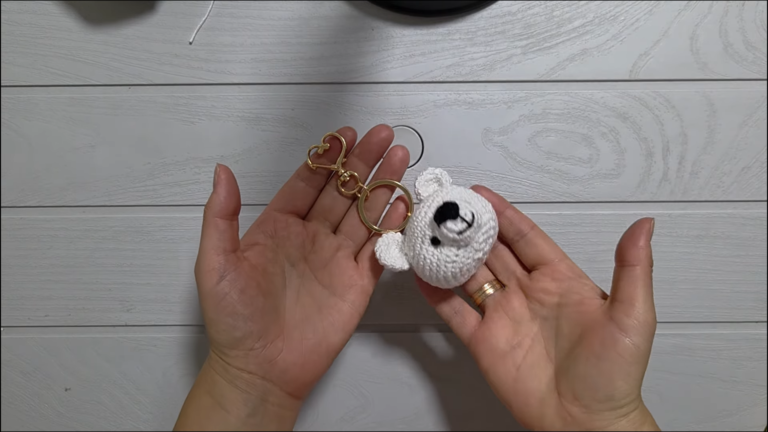
Cute Crochet Mini Dog Amigurumi Pattern Step-by-Step
This mini crochet dog amigurumi pattern walks you through a tiny puppy tutorial with sweet proportions, textured stitches, and an adorable spotted body. If you love small amigurumi animals, this project is quick, giftable, and incredibly fun to customise.
Amigurumi is the art of crocheting small stuffed figures, usually worked in tight single crochet rounds to create clean, sturdy shapes. It’s a relaxing, satisfying crochet style because you can watch a character “appear” as you build simple forms like balls, tubes, and little rounded limbs.

Mini crochet animals are especially popular because they’re fast, portable projects that use only a small amount of yarn. They also have that irresistible miniature look: small paws, round heads, and simple embroidered faces that instantly feel cute.
This tiny crochet dog design (based on the image/tutorial you referenced) is beginner-friendly because it relies on classic amigurumi shaping magic ring, single crochet, increases, decreases and the parts are small and forgiving. The puppy’s charm comes from its rounded head, compact body, short legs, and a sweet, spotted pattern that makes it look like a little puppy curled up in a pocket.
Materials Needed
- Yarn:
- Main colour: white or cream
- Spotcolourr: red-brown, tan, or chocolate brown (small amount)
- Crochet hook: 2.0–3.0 mm (use a smaller hook for tighter stitches)
- Safety eyes (4–6 mm) or black beads (or embroider eyes for baby-safe)
- Stuffing: small amount (polyfill or yarn scraps)
- Tapestry needle (blunt tip)
- Stitch marker (or a scrap strand of yarn)
- Embroidery thread: black (nose/mouth), optional pink (cheeks)
- Scissors
Basic Skills Required
You’ll be comfortable with this pattern if you can do the following:
- Magic ring (MR): creates a tight centre so stuffing doesn’t show.
- Single crochet (sc): the main stitch that gives amigurumi its smooth, slightly “textured” look.
- Increase (inc) and decrease (dec): used to shape the round head and taper the body.
- Working in rounds: continuous spirals without joining (most common for amigurumi).
- Sewing parts: stitching legs, ears, and tail securely with a tapestry needle.
General Construction Overview
This tiny dog is made from classic mini amigurumi building blocks:
- Head starts with a magic ring.
- Increases from a round shape, like a little crocheted marble, growing into a smooth ball.
- The body is built continuously from the head or made separately (this tutorial uses a simple continuous head-to-body for fewer seams).
- Legs are four small, rounded pieces that give the puppy a sturdy “standing” look without long limbs.
- Ears are tiny and soft slightly floppy or rounded triangles, depending on how you sew them.
- The tail is short and simple, so it doesn’t overpower the miniature proportions.
- The spotted pattern can be crocheted in with small colour changes or added afterwards with embroidered or felt-like stitched spots.
- All parts are assembled at the end, then the face is embroidered to create a cute expression.
The overall effect (like in the image) is a very small, palm-sized puppy with a slightly oversized head, a compact body, and tiny legs sweet, balanced, and “collectable.”
Step-by-Step Base Pattern (Head & Body)
This is the main body piece. Work in continuous rounds. Use a stitch marker to track the first stitch of each round.
Abbreviations
- MR = magic ring
- sc = single crochet
- inc = increase (2 sc in one stitch)
- dec = decrease (insert hook into front loops of next 2 stitches, sc them together)
- sl st = slip stitch
- st(s) = stitch(es)
Finished Size
Using DK/light worsted with a 2.5 mm hook: about 2–3 in (5–7.5 cm) tall.
Using thinner yarn (sport/fingering) makes it even smaller perfect for “tiny puppy” vibes.
Head (start in white/cream)
Round 1: MR, 6 sc (6)
Round 2: inc in each st (12)
Round 3: (sc, inc) x6 (18)
Round 4: (2 sc, inc) x6 (24)
At this point the head starts looking nicely rounded and “mini plush” without getting too large.
Rounds 5–7: sc around (24)
These even rounds add head height and create that cute, smooth dome.
Eye Placement (do this before shaping down)
Place safety eyes between Rounds 6–7, about 5–6 stitches apart (adjust to your taste).
- Closer eyes = extra baby-cute
- Wider eyes = more “puppy” realism
Shape Down to Neck
Round 8: (2 sc, dec) x6 (18)
Round 9: (sc, dec) x6 (12)
Begin stuffing the head firmly but not rock-hard. The head should feel rounded and soft, with no lumpy corners.
Body (worked from the head)
The body is small and slightly oval, like a tiny bean under a bubble head.
Round 10: (sc, inc) x6 (18)
This widens again to form the chest/upper body.
Rounds 11–12: sc around (18)
Add Spots (optional during body rounds)
If you want crocheted-in spots, you’ll make do with the colour or changes here (see Section 13 or details). Otherwise, continue in white and add spots later.
Round 13: (sc, dec) x6 (12)
Stuff the body lightly.
For a mini dog, less stuffing is better too much makes it look like a ball and can push the legs outward awkwardly.
Round 14: dec x6 (6)
Fasten off, weave the tail through the front loops of the remaining stitches, and pull tight to close. Weave in the end.
Proportion Tip (for that “tiny puppy” look):
- A slightly larger head and smaller body are what make it extra cute. If your body looks too long, reduce Round 12 (do only one round at 18 sts).
Step-by-Step Parts Pattern
A. Legs (4 small legs)
These are tiny, rounded nubs that give stability without making the puppy tall.
Make 4 in white/cream.
Round 1: MR, 6 sc (6)
Round 2: (sc, inc) x3 (9)
Round 3: sc around (9)
Round 4: sc around (9)
Lightly stuff the leg (just a pinch), then flatten the opening.
Fasten off,f leaving a long tail for sewing.
Leg Shape Note:
When you flatten the top, the leg becomes a little “pill” shape rounded on the bottom, flatter at the top perfect for attaching neatly to the body.
B. Ears (2 small floppy/rounded ears)
In the image, the ears look small and soft, not stiff. This simple shape gives a gentle, le floppy triangle.
Make 2 in white/cream (use a or spcolourlor for a marked ear).
Round 1: MR, 4 sc (4)
Round 2: (sc, inc) x2 (6)
Round 3: sc around (6)
Round 4: (2 sc, inc) x2 (8)
Round 5: sc around (8)
Do not stuff. Flatten.
Fasten off with a long tail.
Ear Styling Options:
- Sew flat for a perky look
- Sew with a slight fold at the base for a floppy puppy ear
C. Tail (short and simple)
The tail should be tiny just enough to read “puppy,” not so long that it steals attention.
In white/cream:
Round 1: MR, 5 sc (5)
Rounds 2–3: sc around (5)
Fasten off, leave a tail for sewing.
No stuffing needed.
Alternative: chain 4, sc in 2nd chain from hook and across (3 sc), fasten off for a flatter tail.
D. Snout / Face (optional muzzle shaping)
You have two beginner-friendly options:
Option 1: No separate snout (simplest)
Skip a muzzle piece and embroider the nose/mouth directly onto the head. This keeps the dog extra tiny and very clean-looking.
Option 2: Tiny muzzle (adds dimension)
In white/cream (or a slightly darker cream):
Round 1: MR, 5 sc (5)
Round 2: inc around (10)
Round 3: sc around (10)
Fasten off, leaving a tail.
Lightly stuff (just a pinch) so it puffs slightly.
Assembly Instructions
Assembly is where your puppy goes from “parts” to personality. Take a minute to pin pieces in place (or hold them with clips) before sewing.
Step 1: Attach the legs evenly
- Turn the body so the closed end is the bottom.
- Position the two front legs near the body’s underside, spaced evenly.
- Position two back legs near the rear underside, matching spacing.
Placement guide (easy visual):
- Imagine the body’s bottom as a small oval.
- Sew legs at the “four corners” of that oval.
- Make sure all four touch the table so the puppy stands without wobbling.
Sew each leg with small whip stitches around the flattened top edge.
Step 2: Attach the tail
Sew the tail to the back of the body, slightly above the bottom (so it doesn’t drag). Angle it slightly upward for a perky look.
Step 3: Attach the ears
Sew ears to the sides/top of the head, around the area of Rounds 4–6.
- For a classic puppy: place ears slightly to the side.
- For a “younger” look: place them a bit lower and more forward.
Step 4: Add the muzzle (if using)
Centre the muzzle below the eyes, around the lower front of the head. Stitch around the edge neatly.
Keep it small this is what makes it look miniature and sweet.
Step 5: Final balance check
Set the puppy down and check:
- Does it sit level?
- Are legs symmetrical?
- Are ears even?
Small adjustments now make a big difference.
Face Detailing
Face details are tiny, but they’re what make your puppy look calm, playful, sleepy, or curious.
Nose Embroidery
Using black embroidery thread (or dark brown for a softer look):
- Stitch a small triangle or oval nose centred on the muzzle area (or directly under the eyes if no muzzle).
- Keep it small mini amigurumi noses should be delicate.
Mouth Shaping
A simple mouth looks best on tiny pieces:
- Stitch one short vertical line down from the nose.
- Add a tiny curved stitch to one side (a gentle smile).
Eye Placement Tips
- Eyes set slightly lower on the head = extra-cute “baby” vibe.
- Eyes placed slightly wider apart = more realistic puppy proportions.
Adding Personality
- Sleepy: embroider eyes as small curved lines instead of safety eyes.
- Playful: add a longer curved smile and tiny cheek stitches.
- Shy: add small pink cheek dots with embroidery thread.
Colour Pattern / Spots Design
That spotted body is a big part of the charm. You can create it in two ways:
Option A: Crochet-in Spots (colour changes)
During body rounds (Rounds 11–12 are perfect), change to your spot colour for a few stitches:
How to change colour or cleanly in single crochet:
- Work the last yarn-over of the stitch with the colour.
- Continue crocheting with the colour for 2–5 stitches (tiny spot).
- Switch back to the main colour the same way.
Spot tips:
- Tiny dogs look best with small, scattered patches rather than large blocks.
- Keep floats short. You’re carrying yarn inside; make sure it doesn’t show through.
Option B: Embroidered Spots (easiest + neatest for mini work)
After the puppy is finished, use your rspot-coloured yarn or embroidery floss to stitch small, irregular circles/patches onto the body.
How to embroider spots that look crocheted” n””
- Use duplicate stitch (over existing stitches) for a tidy, integrated look.
- Make 2–3 spots on the back and sides avoid the belly area where legs attach.
Visual suggestion based on the image:
- One medium spot on the side of the body
- One smaller spot near the back
- Optional tiny dot spot near the shoulder
Customization Ideas
- Different dog breeds (easy swaps):
- Dachshund: make the body longer (add 2–3 extra rounds at 18 sts)
- Frenchie/Pug: shorten muzzle, place ears higher
- Beagle: floppy ears (make ears longer with extra rounds)
- Dalmatian: white body, black embroidered spots
- Colour variations:
- Cream + caramel spots, grey + white, black + tan accents
- Keychain version:
- Add a small jump ring or stitch a loop of yarn on top of the head.
- Use firmer stuffing and tight stitches for durability.
- Mini collectable toys:
- Make a whole” ” “”it” “r”” with different spot placements and facial expressions.
Tips for Beginners
- Use tight stitches. Amigurumi looks best when the fabric is dense, and stuff doesn’t peek through.
- Use a smaller hook than your yarn label suggests That’s the secret to a clean mini finish.
- Keep stitches even and count rounds. Tiny amigurumi magnifies small counting mistakes.
- Pin parts before sewing. Even a slight shift in leg placement changes how the puppy stands.
- Less stuffing is more (especially in mini sizes). Overstuffing can stretch stitches and distort shape.
Common Mistakes to Avoid
- Loose stitches or gaps: stuffing will show, and the pup won’t look neat. Size down your hook and keep tension steady.
- Oversized parts: tiny amigurumi depends on the right proportions. Keep legs and ears small and subtle.
- Uneven assembly: mismatched leg placement leads to wobbling. Measure spacing by counting stitches or aligning to bo “y “sid” s.”
- Incorrect proportions (head too small): t “e “cute fac” o r” often comes from a slightly larger head. Don’t be afraid of that classic amigurumi look.
Uses of Mini Crochet Dog
This tiny crochet puppy is a surprisingly versatile make:
- Gifts: sweet, handmade, and quick to personalise
- Keychains and bag charms: especially in cotton yarn for durability
- Desk decor: a tiny buddy next to your monitor or plants
- Selling handmade items: great for craft fairs mini items sell well as impulse buys
- Kids’ toys: Use embroidered eyes for safety, and stitch parts very securely
FAQ Section
1) Is this mini crochet dog amigurumi pattern beginner-friendly?
Yes you’re comfortable with single crochet in the round and basic increases/decreases. The small size is the only challenge, but the steps are simple.
2) What yarn is best for a tiny puppy amigurumi?
DK or sport weight yarn is ideal for a neat mini look. Worsted works too just use a smaller hook. Cotton gives crisp stitch definition; acrylic feels softer.
3) Can I sell finished products made from this pattern?
In most cases, yes, for finished items. You’re singing this tutorial for your own m.ait’ sommon to sell finished plushies—judon’topy/paste the pattern text as your own.
4) How do I resize the puppy?
- Bigger: use thicker yarn + larger hook (easiest method), or add one more increase round on the head (to 30 sts) and match the body.
- Smaller: use fingering yarn + 2.0 mm hook, and stop the head at 18–21 sts.
5) Can I make it without stuffing?
You can, but it will look flatter and won’t hold the rounded puppy shape as well. If you want a no-stuff version, consider making it as a flat applique-style puppy instead, or stuff only the head lightly.
Conclusion
A mini crochet dog amigurumi is the perfect blend of quick, cute, and satisfying. With a rounded head, compact little body, tiny legs, and that sweet spotted pattern, this puppy comes together in a way that’s simple to learn but still leaves room for creativity. Once you make one, you’ll see how addictive mini amigurumi is. Each small change in ear shape, eye placement, or spots creates a totally new puppy personality.