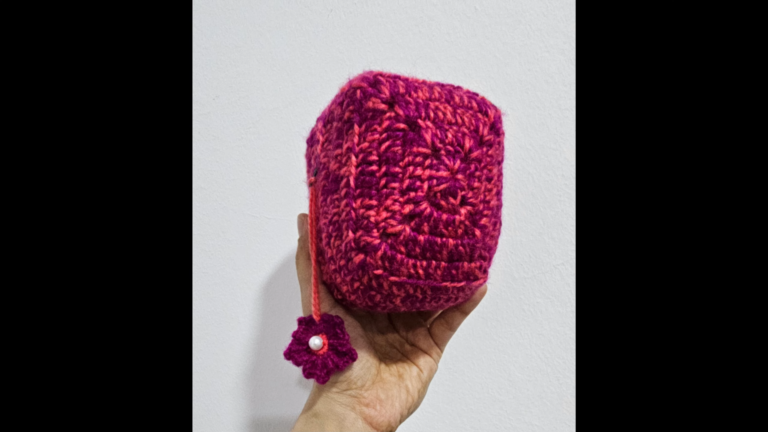
Amazing Crochet Anxiety Suitcase Sensory Amigurumi Pattern
Soothe the senses in style with the Amazing Crochet Anxiety Suitcase Sensory Amigurumi compact, travel-ready, and brimming with textures, clicks, and playful pockets that invite calm focus anytime, anywhere.
Portable peace, stitched in every loop. The Amazing Crochet Anxiety Suitcase Sensory Amigurumi Pattern packs soothing textures, clickable buttons, whispery crinkles, zipper paths, and gentle pull-tabs into a charming mini case you can take anywhere. Customize colors and yarns, swap panels, and add pockets for a truly personal calm kit.
Beginner-friendly instructions, clear stitch counts, and modular pieces make it a fast, satisfying make and an adorable gift. Create mindful, screen-free fidgeting that helps busy hands settle and curious minds focus at home, in transit, or between tasks.
Uses:
- On-the-go fidget companion for travel, waiting rooms, or classrooms
- Quiet focus aid for sensory breaks or study time
- Thoughtful, customizable gift for kids, teens, or adults
Amazing Crochet Anxiety Suitcase Sensory Amigurumi Pattern
If you’re craving a calming, travel-ready project, then this Amazing Crochet Anxiety Suitcase Sensory Amigurumi will pleasantly surprise you. Not only is it soft and squishy, but it also offers soothing textures that help your hands relax. Moreover, the instructions are simple, the steps are structured, and the features are customizable.
Level of Difficulty
- Beginner to Confident Beginner
- Skills used: chain (ch), single crochet (sc), slip stitch (sl st), increase (inc), decrease (dec), optional bobble stitch, and simple seaming
- Consequently, if you know sc and can sew neatly, you are ready to go.
Finished Size
- Approximately 12 cm wide x 9 cm tall x 5 cm deep (4.75 x 3.5 x 2 in)
- If you prefer a larger piece, then simply add starting chains and rows as noted in the variations below.
Gauge (US terms)
- 18 sc x 20 rows = 10 x 10 cm (4 x 4 in) with a 3.5 mm (E-4) hook
- Because amigurumi benefits from firmness, keep your tension snug to prevent gaps.
Materials with exact measurements
- 100% cotton worsted (Category 4) yarn:
- Color A (main body): 60 g (approx. 110 m / 120 yd)
- Color B (trim/accents): 20 g (approx. 35 m / 38 yd)
- Color C (texture patch): 10 g (approx. 18 m / 20 yd)
- Crochet hook: 3.5 mm (E-4); alternatively, use 4.0 mm (G-6) for a softer fabric
- Polyester fiberfill: 60 g
- Zipper: 10 cm (4 in) nylon coil zipper
- Ribbon loops: five pieces, each 25 cm (10 in) long; widths 0.6–1.5 cm (1/4–5/8 in) for varied texture
- Crinkle insert: food-safe crinkle cellophane or clean snack bag plastic, cut to 12 x 8 cm (4.75 x 3.15 in)
- Velcro dots: 2 cm (3/4 in) diameter, 1 pair
- Tapestry needle, scissors, stitch markers, measuring tape
- Optional insert: flat foam sheet 10 x 7 x 2 cm (4 x 2.75 x 0.75 in)
- Optional (for adults only): two 15 mm (5/8 in) buttons
For safety, avoid detachable parts for children under 3; therefore, skip buttons and secure ribbons with multiple passes.
Special Features
- Zipper pocket for quiet fidgeting
- Crinkle patch for sound and touch
- Ribbon loops for stroking and braiding
- Optional bobble texture square for extra sensory input
- Comfortable handle for easy carrying
- As a result, this mini “suitcase” becomes both comforting and functional.
Step-by-Step Instructions (with times)
All steps use US terms. Before you begin, read through once; consequently, you’ll avoid simple mistakes and keep your pace steady.
- First, make the Front Panel Rectangle (25–35 minutes)
- With Color A, ch 22.
- Row 1: sc in 2nd ch from hook and across (21 sc). Ch 1, turn.
- Rows 2–18: sc across (21 sc). Ch 1, turn each row.
- Fasten off with a 30 cm tail for seaming.
- Tip: Measure as you go; you are aiming for about 12 x 9 cm. If needed, then add or subtract rows to match the height.
- Next, make the Back Panel Rectangle (25–35 minutes)
- Repeat the front panel exactly.
- Consequently, you will have two equal rectangles ready for assembly.
- Then, create the Gusset/Side Strip (60–75 minutes)
- With Color A, ch 10 (approx. 5 cm width).
- Row 1: sc in 2nd ch and across (9 sc). Ch 1, turn.
- Continue rows in sc until the strip measures 42 cm (16.5 in) long.
- Fasten off with a 50 cm tail for seaming.
- Additionally, count rows or measure frequently so the strip does not come up short.
- After that, add Sensory Features to the Front Panel (55–80 minutes total)
a) Zipper Pocket (20–30 minutes)
- With Color B, ch 14.
- Row 1: sc in 2nd ch and across (13 sc). Ch 1, turn.
- Rows 2–10: sc across. Then, sl st around for a neat edge.
- Pin the zipper behind the top edge and hand-sew with small backstitches. Finally, sew the pocket sides and bottom to the front panel.
b) Crinkle Patch (15–20 minutes)
- With Color C, ch 12.
- Row 1: sc in 2nd ch and across (11 sc). Ch 1, turn.
- Rows 2–8: sc across.
- Place the 12 x 8 cm crinkle sheet behind the patch; then whipstitch three sides. Insert thecrinklede sheet and sew the last side closed.
c) Ribbon Loop Tags (10–15 minutes)
- Fold each 25 cm ribbon in half to create loops.
- Evenly space 3–5 loops along one side of the front panel; then insert the raw ends about 1 cm into the fabric.
- Sew securely with multiple passes; consequently, the loops will withstand frequent fidgeting.
d) Optional Bobble Texture Square (10–15 minutes)
- With Color C, ch 8; work 6 rows of sc for a 5 x 5 cm square.
- If you enjoy texture, then add bobbles in one row; otherwise, keep it simple.
- Sew it onto the upper-left area for balance.
- Meanwhile, crochet the Handle (15–20 minutes)
- With Color B, ch 31.
- Row 1: sc in 2nd ch and across (30 sc). Ch 1, turn.
- Rows 2–3: sc across for a sturdy strap.
- Curve and position it at the top of the front panel; then sew both ends securely with extra stitches.
- Subsequentlyassemblele the Suitcase (45–60 minutes)
- Align one short end of the gusset with a lower corner of the front panel.
- Use stitch markers every 2–3 cm and ease the strip neatly around corners.
- Seam the gusset to the front panel using whipstitch or sc through both layers.
- Then align the back panel with the free edge of the gusset. Seam around, but leave a 6–7 cm opening along one side for stuffing.
- Then, Stuff, Shape, and Close (10–15 minutes)
- Insert fiberfill in small handfuls, especially into corners; consequently, the shape stays rectangular.
- If using foam, slide it in first and add light stuffing around it.
- Close the opening with a firm whipstitch or sc seam.
- Finally, add the Velcro Flap (10–15 minutes)
- With Color B, ch 16.
- Row 1: sc in 2nd ch and across (15 sc). Ch 1, turn.
- Rows 2–4: sc across. Fasten off.
- Sew one Velcro dot to the flap and the matching dot to the front panel. Then attach the flap above the crinkle patch or pocket for a gentle open–close fidget.
Total making time: Approximately 3.5–4.5 hours for beginners, depending on pace and features.
Common Mistakes (and Easy Fixes)
- Uneven panel edges: If a row count drifts, then pause and recount. Rip back only the last row before the issue spreads.
- Wavy zipper: If the tape stretches, then your stitches will ripple. Instead, use short, even backstitches without pulling.
- Warped gusset: When turning corners, add an extra stitch if needed; otherwise, the seam may pucker.
- Gaps in fabric: If stuffing shows, then tighten your tension or move down a hook size.
- Overstuffing: Add filling gradually; as a result, the sides remain straight, and the silhouette stays crisp.
Variations and Sizing Tips
- Larger suitcase: To scale up, add 4–6 chains to the panel width and 4–6 rows to the height. Then extend the gusset to match the new perimeter. Alternatively, use a 4.5 mm hook and thicker yarn.
- Smaller charm: For a mini, ch 16 and work 12 rows for panels; then use a 3.0 mm hook and lighter stuffing. Omit the zipper and keep ribbons plus a tiny crinkled patch.
- Quiet version: If sound is a concern, then skip the crinkle and Velcro. Instead, add extra ribbon loops or a bobble square for texture.
- Color themes: For instance, try “Ocean” (teals and shells), “Sunset” (corals and golds), or “Minimal” (calming neutrals). Consequently, your suitcase can match your mood.
Tutor Suggestions for Beginners
- Before you start, place a stitch marker in the first stitch of each row; therefore, your edges stay straight.
- As you work, measure both panels together. If one is larger, then lightly mist and pat to size before seaming.
- When in doubt, practice the seam on a small swatch; as a result, your final edges look clean.
- To save time, leave long tails where you plan to sew (pocket, handle, flap); consequently, you’ll weave in fewer ends.
Finishing Tips
- To secure everything, weave ends in several directions so they lock. Furthermore, double-check ribbons and seams for durability.
- For smoother panels, light steam-block before assembly; however, avoid steaming thcrinkledle area.
- For care, hand-wash cool, press with a towel, and dry flat. If you added foam, then spot-clean only.
- Finally, give the suitcase a gentle squish so the stuffing settles and the shape looks neat.
In short, this pattern now flows step by step, so beginners can follow with confidence. Ultimately, the thoughtful transitions, clear sizing tips, and tactile features make your Anxiety Suitcase Sensory Amigurumi both comforting and beautifully crafted.