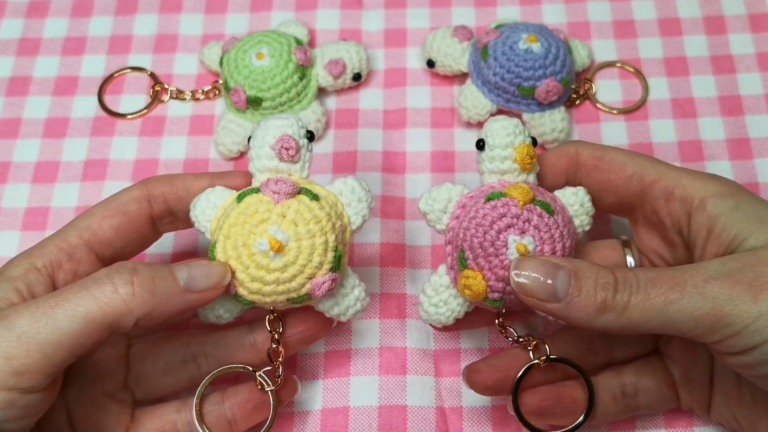
Charming Crochet Baby Demo Amigurumi Pattern Toy
This Crochet Baby Demo Amigurumi is beginner-friendly and fun. Follow easy instructions to make a squishy toy that’s ideal for gifts and everyday cuddles.
Crochet a soft, squishy baby toy with this simple, step-by-step pattern. The Charming Crochet Baby Demo Amigurumi Pattern Toyi uses basic stitches, clear photos, and minimal sewing, so beginners can finish fast. Choose your colors, add a cute face, and adjust size by changing yarn weight.

The shapes are easy to hold, gentle for little hands, and easy to wash. Make one in an evening, or batch a few for gifts. This pattern turns small scraps into a polished, huggable keepsake.
Uses:
- Baby shower gift or newborn photo prop
- Nursery decor or stroller clip-on toy
- Quick craft fair item or last-minute present
Charming Crochet Baby Demo Amigurumi Pattern Toy
Soft, squishy, and irresistibly cute, this Charming Crochet Baby Demo Amigurumi is a tiny plush toy you can finish in an afternoon. Worked seamlessly from the base up, the body, legs, and arms are crocheted in one piece; then, a dramatic five-petal “flower” face is made separately and sewn on. Because the stitches are simple and the construction is straightforward, beginners can follow along confidently. Moreover, the result is a palm-sized companion that doubles as a sweet toy or, with a carabiner, a keychain or bag charm. Let’s grab plush yarn, a hook, and some stuffing; then, step-by-step, we’ll craft a trendy mini amigurumi that looks polished while still being easy to make.
Before we begin, here’s the plan: you’ll crochet a small stuffed body (with tiny cluster legs and neat chain-loop arms), shape a round head, then create a layered, petaled flower and attach it to the front. Along the way, you’ll find time estimates, helpful notes, and lots of tips so you can enjoy every stitch.
What You’ll Make (Finished Size, Features, and Fit)
- Finished height: approximately 11 cm (measured from the highest point to the bottom).
- Construction: seamless body with integrated legs and arms; separate, layered flower face, then sewn to the body.
- Texture: plush chenille yarn for a velvety finish that’s gentle on little hands.
- Use: pocket toy, nursery decor, gift topper, or optionally attach a carabiner for a keychain.
Because the toy is small and soft, it’s great for practicing amigurumi techniques without committing to a long project.
Materials
- Plush/chenille yarn (approx. 120 m per 100 g skein works well with a 4 mm hook.
- Main color (Body + second flower layer): about 30–40 g (≈ 36–48 m)
- Red (Flower petals): about 10–15 g (≈ 12–18 m)
- Black (Flower center): a few grams (≈ 2–4 m)
- White (Embroidery details): a few grams (≈ 2–4 m)
- Crochet hook: 4.0 mm
- Fiberfill stuffing: approximately a small handful (20–30 g)
- Tapestry needle (blunt), scissors
- Stitch marker or contrasting thread (for round tracking)
- Optional: small carabiner or keychain hardware, safety pin(s), or sewing pins for positioning the flower
Note: If you substitute yarn, choose a similarly plush yarn that meets the hook and size recommendations; otherwise, your finished measurements may vary.
Abbreviations and Notes (US Terms)
- MR = magic ring (amigurumi ring)
- ch = chain
- sl st = slip stitch
- sc = single crochet
- inc = increase (2 sc in one stitch)
- dec = decrease (sc2tog)
- hdc = half double crochet (used in petals)
- dc = double crochet
- 2-dc-tog = two double crochets worked together with one top (a small cluster)
- 4-dc-cluster = work 4 partial dcs into the same stitch, then yarn over and pull through all loops on hook to close
- sts = stitches
- R = round/row
Tip: Work in continuous rounds for the body and head unless noted. Place a marker in the first stitch of each round and move it up.
Gauge (Helpful, but Flexible)
Because plush yarn is forgiving, exact gauge is less critical for this tiny toy. Nevertheless, aim for a dense fabric so stuffing doesn’t show through.
- Target: approximately 8–9 sc per 5 cm (2 in) in the round with a 4 mm hook.
- If your fabric looks loose, go down a hook size; if it’s too tight or stiff, go up.
Step-by-Step Instructions (With Making Times)
All times are approximate and assume a relaxed pace.
- Body Base: Magic Ring and Increase to 16
Estimated time: 10–15 minutes
- R1: With the main color, make an MR; work 8 sc into the ring (8).
- R2: Inc in each stitch around (16).
Because this is the base, keep your tension tidy and even. Moreover, double-check your stitch count now to make the next steps smooth.
- Leg Round: Add Tiny Cluster Legs
Estimated time: 10–15 minutes
- R3: sc 5; in the next stitch, work a 4-dc-cluster to form the first leg (see Notes below); sc 3; in the next stitch, work another 4-dc-cluster to form the second leg; sc 6 to end (16 total sts remain).
Notes for the leg cluster:
- Yarn over, insert hook into the same stitch, pull up a loop, yarn over, pull through two loops (leave the last loop on the hook). Repeat this partial dc a total of 4 times in the same stitch. Then yarn over and pull through all loops on the hook to close. This creates a small, puffy leg that dangles from the body.
- Because each cluster sits in a single stitch, your overall round count stays at 16.
Additionally, adjust the leg placement by one stitch either way if you prefer them more centered.
- Torso Rounds: Build Height (No Shaping)
Estimated time: 15–20 minutes
- R4–R6: sc around (16 each round).
Furthermore, keep the marker aligned and your stitches compact. If the piece starts to spiral, gently rotate your starting point by moving the marker for visual balance (this won’t change the stitch count).
- Arm Round: Chain Loops with Petal Tips
Estimated time: 15–25 minutes
- R7: sc 5; ch 7; in the 3rd ch from hook, work 2-dc-tog (two dcs together with a common top) to form a tiny petal tip; sl st into the same chain where you worked the 2-dc-tog; then sl st in each of the next 4 chs back toward the body; sl st into the body stitch where the chain began to secure the arm. Next, sc 6; repeat the arm sequence (ch 7 → 2-dc-tog in 3rd ch → sl st back along chain → sl st into body); finally sc 5 to the end (16).
Because yarn thickness varies, you can add or subtract one chain to tweak arm length. Moreover, keep your slip stitches relaxed so the arms don’t curl excessively.
- Taper and Stuff the Body
Estimated time: 10–12 minutes
- R8: [sc 2, dec] around (12).
- Lightly stuff the body with fiberfill. Press gently to keep it rounded yet squishy.
Additionally, do not overfill; you want the top open enough to transition into the head smoothly.
- Head: Increase to 24 and Work Even
Estimated time: 35–45 minutes
- R9: inc in each stitch around (24).
- R10–R12: sc around (24 each round).
Because the plush yarn hides stitches, count out loud or use a row counter. Moreover, pause and shape the piece; the head should start forming a neat sphere above the body.
- Shape and Close the Head
Estimated time: 20–25 minutes
- R13: [sc 2, dec] around (18).
- Add a bit more stuffing to the head, just enough to hold its shape.
- R14: [sc 1, dec] around (12).
- R15: dec around (6). Fasten off, leaving a short tail.
- To close neatly: weave the tail through the front loops of the last 6 sts and pull tight like a drawstring; secure and bring the tail out to the side of the head. Snip and massage the toy to settle the fiberfill.
Therefore, your body and head are complete, and your toy now looks like a little plush figure awaiting its flower face.
- Flower Layer 1: Black Center + Red Petals
Estimated time: 25–35 minutes
- With black yarn:
- R1: MR, 5 sc (5).
- R2: inc around (10).
- Change to red yarn:
- R3: [sc 1, inc] around (15).
- R4 (petal-making round):
- [sl st in next st; in the following stitch work a full petal: hdc, dc, dc, dc, hdc all in the same stitch] repeat this sequence 5 times total to create five petals. Finish with a sl st to tidy the round and fasten off the red.
Additionally, pull your magic ring tail to close the center neatly. Tie the black-to-red color change tails securely on the wrong side and weave them in.
- Flower Layer 2: Main Color Petal Layer
Estimated time: 20–30 minutes
Make a second flower exactly as above, except use the main body color for the petals (you may keep the center black or switch to the main color for a softer look):
- R1: MR 5 sc with black (or main color), R2: inc around to 10, R3: [sc 1, inc] x5 to 15.
- R4: Work the same five petals with the main color: [sl st in next st; (hdc, dc, dc, dc, hdc) in next st] repeat 5 times. Fasten off.
Because the two layers will be joined wrong sides together, maintain consistent petal sizes for a clean, stacked look.
- Embroidery Details (Teeth + Petal Highlights)
Estimated time: 10–15 minutes
Before joining the two flower layers, add simple embroidery:
- With white yarn, stitch tiny “teeth” around the ring where the black center meets the petals make small straight stitches radiating slightly inward, spacing them evenly in a circle.
- Additionally, add one or two small white stitches on each red petal to create subtle highlights.
Furthermore, tie the embroidery ends together on the wrong side and weave in securely. Because you haven’t closed the two flowers together yet, this step is easier now.
- Join the Two Flower Layers (Wrong Sides Together)
Estimated time: 12–18 minutes
- Place the two flowers wrong sides together, aligning petals.
- With the main color (or red), join with a sl st through both layers at a low point between petals.
- Working through both layers, sc evenly around each petal, shaping the edges. At the very top of each petal (the widest point), add an extra sc (an increase) if the edge feels tight; this helps the petals lie flat.
- When you reach a valley between petals, you can work a sl st instead of sc to emphasize the separation and keep definition.
Consequently, you’ll get a sturdy, double-thick flower that sits neatly and keeps its shape.
Tip: Leave a long tail at the end of joining this, which will be your sewing tail to attach the flower to the head.
- Attach the Flower to the Head
Estimated time: 15–20 minutes
- Pin the flower to the head so it covers the front and sits centered. Typically, it sits slightly above the midpoint, which looks balanced.
- Using the long tail and a tapestry needle, sew around the inner edge of the flower, catching the posts or the base of the petal layer. Take small, even stitches and check that you’re not shifting the placement.
- Tie off securely and bury the tail inside the head.
Additionally, massage the flower into place and fluff the petals. If a petal twists, nudge it flat and adjust the seam tension slightly.
- Optional: Turn It into a Keychain
Estimated time: 3–5 minutes
- With a small carabiner or keychain ring, catch a stitch at the top of the head. Alternatively, sew on a short loop of chain stitches in the main color and attach hardware to the loop.
- Because plush toys are soft, ensure the hardware is firmly anchored for durability.
Estimated Total Making Time
- Confident maker: 1.5–2 hours
- Beginner pace: 2.5–3.5 hours
Because the toy is compact, you can comfortably complete it in an evening.
Basic Tips for Success
- Use a tight tension: Plush yarn stretches; therefore, keep your stitches snug to prevent stuffing from peeking through.
- Count consistently: Moreover, move your stitch marker each round. It prevents drift and helps keep both legs and arms aligned.
- Stuff lightly at first: Then, as you close the head, add a little more. Consequently, the shape stays round without bulging.
- Shape with your hands: After stuffing, roll the toy between your palms to even out lumps. Furthermore, pinch-and-release petals to set their curve.
- Secure color changes: Tie and weave ends on the wrong side of the flower before joining layers so nothing loosens later.
- Block lightly (optional): A brief steam to the flower held at a distance can help petals relax. However, do not overheat plush yarn.
Common Mistakes (And How to Avoid Them)
- Twisted beginning ring: Always check that your chain (if you have one) or your starting round lies flat before joining. Since we used a magic ring, pull it tight to avoid a hole.
- Losing stitch count in plush yarn: Because stitches are fuzzy, you may accidentally skip or add one. Therefore, count each round aloud or tally with a counter.
- Gaps at the underarms or legs: If a gap appears where the legs or arms are made, snug your slip stitches and cluster close, then give the area a gentle wiggle to seat the stitches.
- Petals curling excessively: You might be pulling your slip stitches too tight along the arm chains or at petal edges. Consequently, relax your tension and add one extra sc at the tip of each petal.
- Flower seam too tight: If the joined flower layers pucker, add occasional increases along the petal edges. Conversely, if it ruffles, skip one sc in a valley between petals.
- Overstuffing the head: Too much stuffing distorts the shape and stretches stitches. Instead, add small pinches at a time, test the shape, and stop when it feels springy.
Variations and Customizations
- Color stories:
- Classic contrast: Black center with red petals and a neutral body.
- Pastel bloom: Cream center with blush petals and a soft grey or mint body.
- Monochrome modern: All in one color, using white embroidery for contrast.
- Size changes:
- Smaller: Use a 3.0–3.5 mm hook and lighter plush yarn; consequently, the toy becomes a tiny charm.
- Larger: Use a 5.0 mm hook and bulkier plush yarn; add a bit more stuffing and keep counts the same.
- Texture tweaks:
- Add subtle surface embroidery on petals with a contrasting thread for a stitched look.
- Work the flower center in back-loop-only on R2 for a slight ridge where the teeth embroidery sits.
- Functional upgrades:
- Rattle insert: Place a small rattle in the head before final closing for a baby-safe sensory toy. Ensure all seams are extra secure.
- Keychain loop: Crochet a short chain (ch 6–8), sl st back to form a loop, and sew to the top; attach hardware.
- Edge definition:
- Outline petals with a round of crab stitch (reverse sc) instead of plain sc when joining the two flower layers; this adds a polished corded edge.
Safety Notes for Gifting to Babies
- Avoid safety eyes or small parts; stick to embroidery only.
- Secure all seams and weave ends deeply.
- Because plush yarn can shed when cut short, always bury tails inside and trim with care.
Care Instructions
- Hand-wash in cool water with mild detergent. Alternatively, place in a mesh bag and use a delicate machine cycle if your yarn label allows.
- Lay flat to dry, reshaping petals and body while damp.
- Avoid high heat; plush yarn can flatten or melt if exposed to hot dryers or steam.
SEO-Friendly FAQs
- How hard is this pattern? Beginner-friendly. Because it uses only sc, inc/dec, slip stitches, and a few simple clusters, it’s great for first-time amigurumi makers.
- How big is the finished toy? Approximately 11 cm tall, depending on yarn tension and hook size.
- What yarn works best? Soft plush/chenille yarn around 120 m/100 g, paired with a 4 mm hook for dense, cuddly fabric.
- Can I finish it in one sitting? Yes, most crocheters complete it in 2–3 hours, including the flower and embroidery.
Quick Reference Pattern (Condensed Counts)
- Body:
- R1: MR 8 sc (8)
- R2: inc around (16)
- R3: sc 5, 4-dc-cluster in next st (leg), sc 3, 4-dc-cluster in next st (leg), sc 6 (16)
- R4–R6: sc around (16)
- R7: sc 5, ch 7 → 2-dc-tog in 3rd ch, sl st back along chain, sl st into base; sc 6; repeat arm; sc 5 (16)
- R8: [sc 2, dec] around (12); lightly stuff
- Head:
- R9: inc around (24)
- R10–R12: sc around (24)
- R13: [sc 2, dec] (18)
- R14: [sc 1, dec] (12); stuff
- R15: dec around (6); close
- Flower (make 2 layers):
- R1: MR 5 sc (5) in black (or main color)
- R2: inc around (10)
- R3: change to petal color [sc 1, inc] (15)
- R4: repeat 5 times: sl st in next st; in following st work (hdc, dc, dc, dc, hdc) in same stitch; sl st in next st
- Embroider white “teeth” at the center edge; add tiny white petal highlights
- Join layers WS together with sc around (add an extra sc at petal tips if tight)
- Sew a flower to the head
Final Thoughts
You did it! You’ve created a Charming Crochet Baby Demo Amigurumi that’s small, squishy, and delightfully modern. Because the construction is simple yet clever, you can make several in different colors, personalize the embroidery, and turn them into gifts, nursery decor, or cute keychains. Moreover, the plush texture invites hugs, while the layered flower adds standout personality. Now, grab those leftover yarns and make a matching set. Once you finish one, the next comes together even faster. Happy stitching!