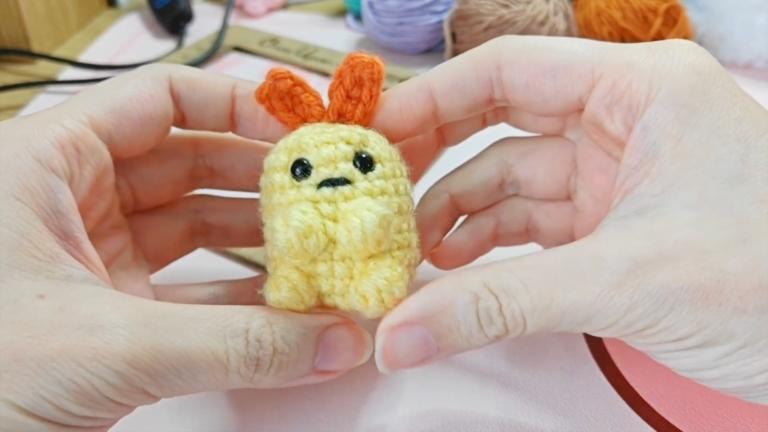
Refined Crochet Garden Swing Duckling Amigurumi Pattern
Glide into whimsy with our Refined Crochet Garden Swing Duckling Amigurumi Pattern, beginner-friendly, irresistibly cute, detail-rich, and guided by smart tips for display-ready results with charming swing decor.
Elevate your craft with the Refined Crochet Garden Swing Duckling Amigurumi Pattern, an elegant, beginner-welcoming make that blends playful charm with polished technique. Follow crisp rounds, neat color transitions, and shaping cues to build a sweet duckling and a sturdy miniature swing that actually hangs. The guide includes yarn and hook suggestions, stuffing density tips, and secure assembly methods for display-ready durability. 
Personalize expressions, bow colors, and swing styling for seasonal looks. Quick to crochet, relaxing to repeat, and beautifully photogenic, it’s ideal for keepsakes and garden-inspired decor.
Uses:
- Nursery shelf decor or spring mantel accent
- Heartfelt handmade gift for baby showers or birthdays
- Eye-catching craft fair piece that draws customers
Refined Crochet Garden Swing Duckling Amigurumi Pattern
To begin, welcome to the Refined Crochet Garden Swing Duckling Amigurumi Pattern, a charming, beginner-friendly project that delivers polished results without stress. Moreover, this guide emphasizes smooth pacing, clear instructions, and balanced assembly so your duckling sits perfectly on its miniature swing. Additionally. Consequently, whether you are new to amigurumi or simply seeking a relaxing make, you’ll find step-by-step body instructions, exact material measurements, common mistake fixes, and thoughtful finishing tips all in one place.
Materials
- Yarn: DK/Light-3 100% cotton
- Duckling (yellow): 40 g
- Beak and feet (orange): 10 g
- Optional detail (white/cream): 5 g
- Swing seat (brown/natural if crocheting seat): 10 g
- Hook: 2.5 mm (US B/1–C/2); alternatively, use 2.75 mm if you crochet tightly
- Safety eyes: 6 mm; however, embroider for baby-safe version
- Stuffing: 35–40 g premium polyester fiberfill
- Tapestry needle, stitch markers, scissors, and straight pins
- Swing supplies:
- Wooden seat: 10 cm wide x 2–2.5 cm deep x 0.6–1 cm thick; or, crochet the seat (see steps)
- Cotton cord/macramé: 2 pieces x 30 cm each
- Optional floral wire (18–20 gauge): 2 pieces x 15 cm each
- Jump ring/key ring: 1–1.5 cm diameter
- Optional embellishments: 1 cm felt blush circles, 3 mm ribbon bow, tiny silk flowers
Difficulty Level
- Beginner to advanced beginner. Specifically, you’ll use single crochet in the round, simple increases and decreases, basic sewing, and light assembly.
Estimated Size and Sizing Tips
- Duckling height: approximately 12–13 cm seated (4.7–5.1 in)
- Swing seat: approximately 10 x 2–2.5 cm (4 x 1 in)
- Sizing tips: For a smaller duck, switch to sport-weight yarn with a 2.25 mm hook; for a larger one, choose worsted cotton with a 3–3.5 mm hook. As a result, the proportions remain balanced while the overall size changes.
Gauge (Helpful but Flexible)
- 24 sc x 26 rows ≈ , 10 x 10 cm using a 2.5 mm hook under typical amigurumi tension. If you notice gaps, therefore size down; if the fabric feels overly stiff, alternatively size up.
Special Features
- Seamless head-to-body shaping for a smooth neck transition
- Quick, modular parts for stress-free assembly
- Swing-friendly proportions, ensuring a level, photo-ready perch
Step-by-Step Instructions (With Making Time and Flow)
Note: Work in continuous spirals unless noted. Additionally, place a stitch marker in the first stitch of each round.
- Head (35–45 minutes)
- Round 1: Magic ring, 6 sc (6)
- Round 2: Inc in each st (12)
- Round 3: (sc, inc) x6 (18)
- Round 4: (2 sc, inc) x6 (24)
- Round 5: (3 sc, inc) x6 (30)
- Rounds 6–10: sc around (30)
- Eye placement: Insert 6 mm safety eyes between Rounds 8–9, 6 stitches apart; alternatively, embroider later for baby-safe.
- Round 11: (3 sc, dec) x6 (24)
- Round 12: (2 sc, dec) x6 (18)
- Begin stuffing the head; consequently, shape it smooth and round.
- Round 13: (sc, dec) x6 (12)
- Neck and Upper Body Expansion (10–15 minutes)
- Round 14: sc around (12) to create a short neck
- Round 15: (sc, inc) x6 (18)
- Round 16: (2 sc, inc) x6 (24)
- At this point, check that the neck is centered and firm.
- Lower Body Growth (25–35 minutes)
- Round 17: (3 sc, inc) x6 (30)
- Round 18: (4 sc, inc) x6 (36)
- Rounds 19–24: sc around (36)
- Meanwhile, gradually stuff the body, especially the base, so the duckling sits upright. As a result, the silhouette remains sturdy.
- Body Taper and Close (20–25 minutes)
- Round 25: (4 sc, dec) x6 (30)
- Round 26: (3 sc, dec) x6 (24)
- Round 27: (2 sc, dec) x6 (18)
- Add more stuffing; therefore, ensure the neck transition is fully supported.
- Round 28: (sc, dec) x6 (12)
- Round 29: dec around (6)
- Fasten off, then weave the tail through front loops to close. Finally, shape gently.
- Wings—Make 2 (15–20 minutes total)
- Round 1: Magic ring, 6 sc (6)
- Round 2: (sc, inc) x3 (9)
- Rounds 3–4: sc around (9)
- Flatten the piece; then slip stitch across 4–5 sts to close. Next, fasten off with a 20 cm tail for sewing.
- Placement: Pin first; afterward, sew at about Round 20 height, wings slightly angled back for lift.
- Beak (10 minutes)
- Round 1: Magic ring, 4 sc (4)
- Round 2: (inc, sc) x2 (6)
- Round 3: sc around (6)
- Flatten and whipstitch centered between the eyes, spanning roughly 2–3 stitches across Round 9. Consequently, the expression looks balanced.
- Feet Make 2 (25–30 minutes total)
- With orange:
- Ch 5; sc in 2nd ch from hook, sc 2, 3 sc in last ch; continue on the other side, sc 2, inc in last (10)
- Round 2: inc, sc 3, inc, inc, sc 3, inc (14)
- Fasten off with long tails. Then, pin both feet to the body base so the toes peek forward. Finally, sew flat; alternatively, tilt slightly outward for a perched look.
- Swing Seat Options (15–25 minutes)
- Wooden seat: Use a smooth plank 10 x 2–2.5 cm; additionally, lightly sand edges if needed.
- Crochet seat:
- With brown, ch 18 (≈ 10 cm). Hdc in 2nd ch from hook and across (17)
- Rows 2–6: ch 1, turn, hdc across (17)
- Optional border: sc around for a neat edge; then fasten off and weave ends.
- Cords: Cut 2 cords at 30 cm each. Optionally, spiral 15 cm floral wire alongside each cord; consequently, the ropes hang straight and neat.
- Assembly and Hanging (20–30 minutes)
- Seat setup: Tie or sew cords at each seat end, spaced 8.5–9 cm apart. Moreover, ensure both cords are equal in length before trimming.
- Duckling placement: Center the duckling; then sew 2–3 small anchoring stitches from the body base to the seat. Therefore, the duck won’t slide.
- Hanging: Feed both cords through a jump ring or key ring; afterward, knot securely and test-dangle. If the seat tilts, then adjust knot positions until level.
Common Mistakes (With Easy Fixes)
- Uneven eyes: First, count rounds carefully; then pin before securing the backs. Consequently, symmetry improves.
- Wobbly neck: If the area between Rounds 12–15 is under-stuffed, then add firm stuffing into the neck channel. As a result, the head stays upright.
- Visible gaps: Should gaps appear, therefore size down your hook or tighten tension slightly. Additionally, insert stuffing in smaller tufts to avoid bulges.
- Tilted swing: If cords are mismatched, then measure and match lengths before tying. Alternatively, add a hidden stitch between the duck and seat for stability.
- Curled feet: When stitching too tightly, lightly steam-block (avoid direct heat on acrylic). Otherwise, resew with a broader surface seam.
Variations for Style and Season
- Baby-safe version: Instead of safety eyes, embroider eyes with black cotton; moreover, glue felt blush with fabric-safe adhesive.
- Seasonal accents: For spring, add a tiny flower crown; for winter, switch to a mini scarf. Similarly, change the seat color to match the decor.
- Size changes: Use worsted cotton and a 3.5 mm hook for a 16–18 cm duckling; conversely, use sport-weight for a mini version. Consequently, adjust swing width to 12 cm for larger sizes.
Tutor Suggestions for Beginners
- Count out loud and move a locking stitch marker each round; therefore, miscounts drop dramatically.
- Practice the invisible decrease (front loops of two stitches) to keep shaping smoothly; additionally, this prevents bumps.
- Stuff gradually every 2–3 rounds; as a result, the body remains springy and evenly filled.
- If hands tire, then work in short-term sessions. Consequently, your tension stays consistent.
- Keep a simple round checklist; furthermore, crossing off each line reduces frogging later.
Finishing Tips for a Professional Look
- Weave ends in zigzag paths inside the body; afterward, tug gently to hide tails completely.
- Lightly steam wings to relax edges (test fiber first); then pinch and hold the curve while cooling. Consequently, the shape sets cleanly.
- Add a 3 mm ribbon bow under the beak or at one wing; moreover, secure it with a few stitches so it won’t unravel.
- For photos, align the seat with the duck’s centerline; additionally, keep cords parallel for a tidy, garden-chic display.
Care and Safety Notes
- If gifting to children under 3, then avoid safety eyes and sew all parts extra securely. Otherwise, the standard version is lovely for decor.
- Spot-clean with a damp cloth; meanwhile, avoid soaking wooden or wired components.
In summary, this refined pattern combines beginner-ready steps with advanced-looking polish. Consequently, you’ll enjoy a calm, rhythmic make and a picture-perfect duckling swinging happily in your space. Finally, share the finished piece, customize the colors, and most importantly, have fun with every stitch.