Charming Crochet Pocket Frog Plushie Amigurumi Guide
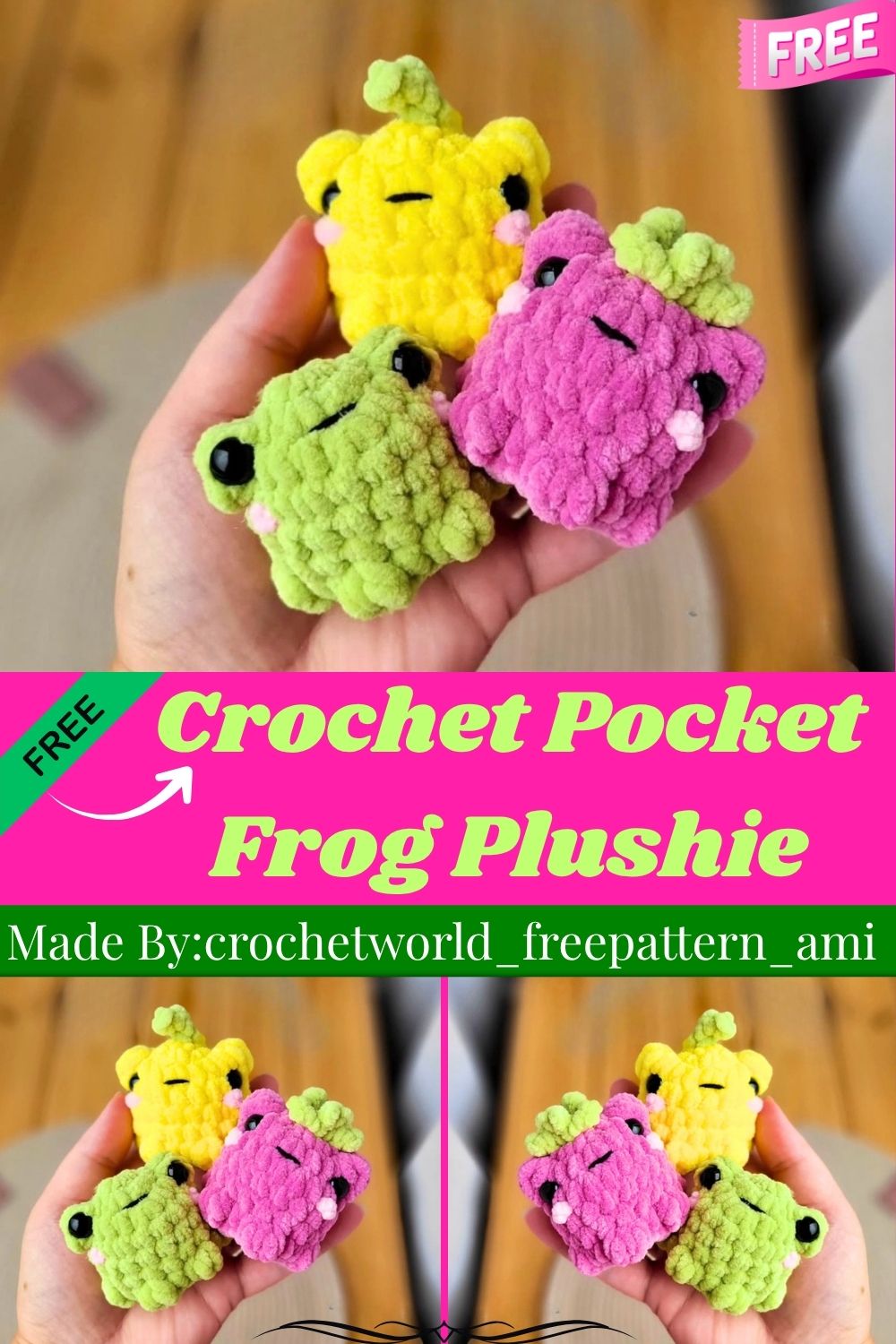
Tiny amigurumi frogs are about to become your new favorite pocket-sized project. For real, this pattern uses simple rounds, quick color changes, and a sweet bobble stitch face. Perfect for keychains, charms, or a shelf full of little green friends.
Small enough to fit in a pocket, this frog plushie packs a lot of charm into a tiny finished size. Low-key, the bobble stitch cheeks and embroidered smile give each frog personality for such a quick make. Two color variations, a classic green frog and a cheerful yellow lemon frog, come from the same base pattern with only a color swap. A tiny leaf accent finishes the lemon version nicely.
Skill Level
Beginner-friendly and fast to finish. Basic single crochet, increases, decreases, and a simple bobble stitch cover everything needed. A great confidence-building project for anyone new to amigurumi shaping techniques.
Materials & Tools
- Plush super bulky weight yarn in green, yellow, and light pink
- A small amount of yarn in a darker shade for embroidering the smile
- A 4mm crochet hook, scissors, a yarn needle, tweezers, a lighter for sealing yarn ends, and a stitch marker
- Fiberfill stuffing
- 10mm safety eyes
- Finished size is approximately 5cm (about 2 inches) using these materials, though individual tension may change the final size
Abbreviations (US Terms)
- MR – magic ring
- sl st – slip stitch
- ch – chain stitch
- sc – single crochet
- dc – double crochet
- BO – bobble stitch (a cluster of unfinished double crochets worked into one stitch, such as BO2dc or BO4dc)
- inc – increase
- dec – invisible decrease
- FO – fasten off
- BLO – back loop only
- FLO – front loop only
Pattern Overview
- Worked in continuous rounds using single crochet, starting from a magic ring
- Body shaped through a short sequence of increase rounds before the bobble stitch details begin
- Bobble stitches worked into specific stitches to create raised eye sockets on round four
- Front loop only chains used to add a decorative ridge detail around round two
- A tiny crocheted leaf, made separately, attaches to the lemon frog variation for extra charm
- Two color versions share the same base pattern, with only the yarn color changing between them
- Requires plush yarn, a small hook, safety eyes, fiberfill, scissors, a stitch marker, tweezers, and a yarn needle
- Finished toys come out at roughly 5cm, though tension differences may shift the final size slightly
- Both frog variations use the same nine or ten rounds, making repeat makes very quick
Special Techniques
Honestly, the bobble stitch eye sockets are the detail that makes these frogs so charming. Working a cluster of unfinished double crochets into a single stitch, then closing them together, creates a raised bump that the safety eyes nestle into perfectly. The front loop only ridge in round two is a nice secondary detail, adding subtle texture right where the color change happens. Both techniques are simple once practiced, and neither requires more than a few extra stitches per round. Working a slow test bobble on scrap yarn first helps build the muscle memory needed before tackling both eye sockets on the real piece.
Common Mistakes
- Placing the safety eyes in the wrong stitch, which leaves the bobble eye sockets looking uneven
- Overstuffing before the final rounds are closed, making it harder to shape the last decrease round
- Skipping the front loop only step, which flattens the ridge detail around the body
- Rushing the bobble stitch closure, leaving a loose bump instead of a tight raised socket
- Using a hook that’s too large for the yarn weight, leaving visible gaps between stitches
- Forgetting to leave a long enough tail when closing the final round, making it hard to hide the ending
- Attaching the leaf before the body is fully stuffed, which makes handling the piece awkward
- Working the smile embroidery too close to the eyes, which crowds the frog’s facial features
- Not weaving in tails securely enough, letting the tiny leaf or cheek stitches loosen over time
Uses & Benefits
These pocket frogs work well as keychains, bag charms, desk decor, or tiny party favors for kids. Trust me, their small size means minimal yarn use, so you can make several in one relaxed afternoon for gifting or selling as a small set. Handmade shop owners often find mini amigurumi charms sell fast since they’re affordable and collectible. Making these also builds core skills like bobble stitches, loop work, and clean color changes, useful for larger future amigurumi projects too.
Helpful Beginner Tips
- Keep a stitch marker on the back of the work throughout, since these rounds are unjoined
- Practice one bobble stitch on scrap yarn before working the full eye socket round
- Stuff gradually as you go rather than waiting until the very last round
- Use tweezers to help place small stitches accurately around the eye sockets
- Seal yarn ends carefully if using a lighter, keeping it well away from the working yarn
- Count stitches after every round, since these small pieces make mistakes easy to miss
- Keep a small dish nearby to hold safety eye backs and other tiny hardware while working
- Work each frog start to finish in one sitting if possible, since the pieces are quick
Assembly
- Start with the base color and work the first few rounds through the eye socket details
- Insert safety eyes into the bobble stitch sockets on the round indicated in the pattern
- Continue working plain rounds until the decrease rounds begin
- Stuff the toy firmly as the decrease rounds close the shape
- Close the final opening, fasten off, and hide the tail inside the toy
- For the lemon version, attach a small green leaf using a slip stitch and a short chain
- Embroider a smile between the third and fourth rounds using contrasting yarn
- Add two small stitches on each cheek using soft light pink yarn for the blush detail
- Trim any stray fibers around the embroidered face so the details stay crisp and visible
- Set the finished frog upright and check that both eyes and cheeks sit evenly balanced
Where Can You Use This Case?
Beyond keychains and charms, these pocket frogs work nicely as party favor bags, desk companions, small shop inventory, or a fun addition to a themed gift alongside other mini amigurumi pieces. Their compact size also makes them easy to mail without much extra packaging.
Why Beginners Will Enjoy This Pattern
No joke, the short round count and repeated simple stitches make this an ideal quick win for beginners, while the bobble stitch detail still teaches a technique that carries over into larger projects. Finishing a whole frog in a single sitting also makes it easy to stay motivated through several rounds.
Tips and Tricks for Success
- Keep bobble stitches consistent in tension so both eye sockets match in size
- Test the color change placement before committing to the full round
- Work the leaf accent separately and set it aside until final assembly
- Keep spare safety eye backs nearby in case one gets lost during placement
- Photograph each finished frog to track which color combinations work best
- Keep a small swatch of each yarn color nearby so future batches match the original set
- Save leftover scraps of plush yarn, since they’re often just enough for one more tiny leaf
Why This Crochet Pattern Is Trending
Real talk, tiny amigurumi charms have been trending across handmade marketplaces for a while now, and these pocket frogs fit right into that miniature crochet wave. Their quick build time and low yarn cost make them an easy pattern to repeat again and again in different colors.
- Mini amigurumi keychains continue to trend across handmade shop platforms
- Bobble stitch details are becoming a popular way to add texture to small designs
- Quick, low-yarn-cost patterns remain in demand for gifting and batch-making
Conclusion
Ngl, these pocket frogs pack a surprising amount of charm into a tiny, quick build. Between the bobble stitch eyes, the soft embroidered smile, and the option to make a whole lemon-themed variation, there’s plenty of room to get creative. Once you finish your first frog, a whole little pond of them probably isn’t far behind.