Easy Crochet Tulip Flower – Free Pattern for Beginners
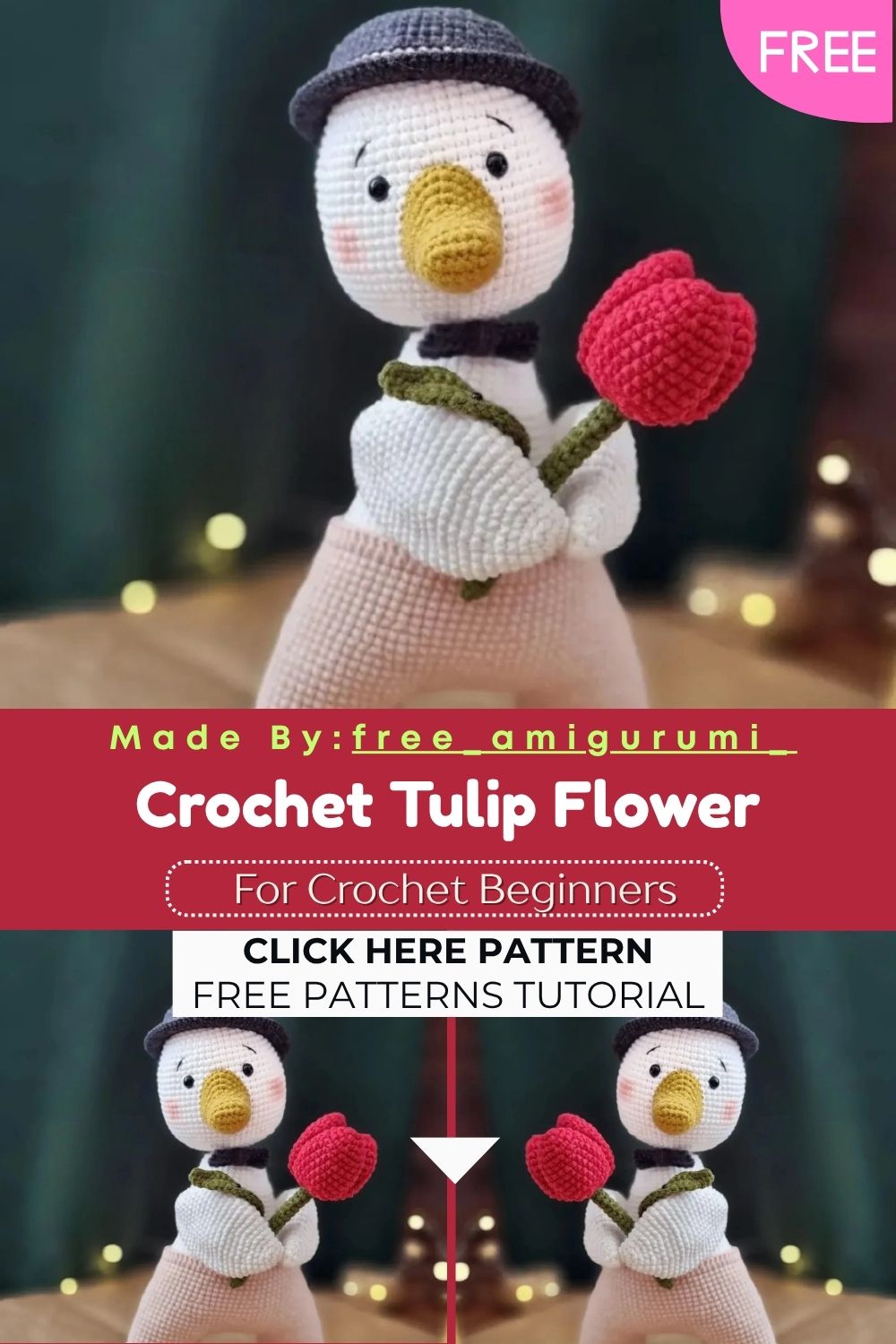
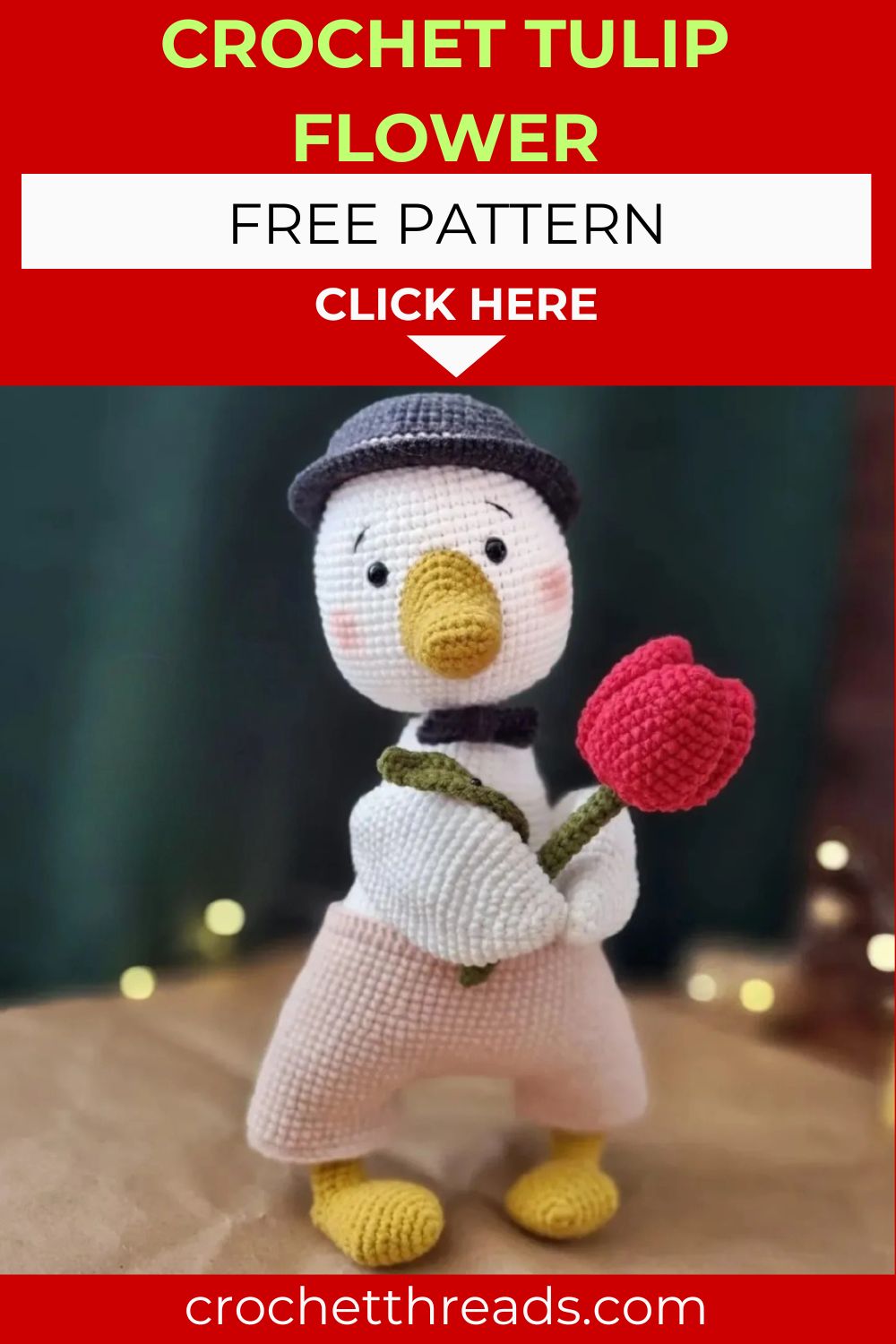
A vibrant red flower core, three soft petals, and a wire-supported stem with a single elegant leaf, this crochet tulip brings everlasting spring color to any room!
This charming flower pattern combines simple round construction with a clever wire-reinforced stem, giving the finished piece enough structure to stand naturally in a vase or display arrangement. The leaf is worked along both sides of a single foundation chain using a gradually building stitch sequence, creating a naturally tapered, lifelike shape without any complicated shaping techniques. Three identical unstuffed petals fan out around the central red core, while the long stem wraps around a folded wire core for lasting stability. Whether arranged as a single stem in a bud vase, gathered into a small bouquet, or gifted as a flower that never wilts, this tulip brings handmade warmth to any spring-themed display.
Skill Level
Beginner-friendly. Single crochet, increase, and decrease form the foundation throughout. Additionally, the leaf construction introduces simple combination stitching using double, treble, and double treble crochet for added textural interest.
Materials You Will Need
Yarn:
- Red yarn for the flower core
- Green yarn for the stem, leaf, and petals
Other Supplies:
- Crochet hook to suit your chosen yarn weight
- Floral wire, twice the length of your desired stem
- Floral tape or plaster wrap for the wire
- Yarn needle
- Scissors
- Polyfill stuffing (for the core only)
Abbreviations
- MR — Magic Ring
- SC — Single Crochet
- DC — Double Crochet
- TR — Treble Crochet
- DTR — Double Treble Crochet
- CH — Chain Stitch
- DEC — Decrease
- INC — Single Crochet Increase
- SLST — Slip Stitch
- ST — Stitch
- RND — Round
- (…)* — Repeat the instructions in brackets the stated number of times
- ( ) — Total number of stitches in that round
Pattern: Leaf
Using green yarn
Chain 22. Work across the sides of the chain, starting from the 3rd stitch from the hook.
First side: 5 dc, 3 tr, 4 dtr, 3 tr, 3 dc, 2 sc, then 3 sc in the very last stitch to turn the corner smoothly.
Second side: Continue across the other side of the chain with 2 sc, 3 dc, 3 tr, 4 dtr, 3 tr, 4 dc, 1 sc (43 total stitches)
This gradual build from single crochet through double, treble, and double treble crochet creates a naturally tapered leaf shape, wide in the center and pointed at both ends.
Fasten off and cut the yarn, leaving a long tail for sewing the leaf onto the stem later.
Pattern: Flower Core
Using red yarn
Rnd 1: 6 sc in MR (6) Rnd 2: inc x6 (12) Rnd 3: (1sc, inc) x6 (18) Rnd 4–7: 18 sc for 4 rounds (18) Rnd 8: (1sc, dec) x6 (12) Rnd 9: dec x6 (6)
Stuff the core lightly before the opening closes too much for comfortable access.
Pattern: Stem
Change the yarn to green at the top of the core.
Rnd 10–30: 6 sc around for 21 rounds total.
Take a piece of floral wire twice the length of your desired finished stem. Fold it in half and insert it down through the center of the crocheted stem tube as you work, providing internal support.
Wrap the folded wire with floral tape or plaster for a smooth, finished appearance before fully inserting it.
Pull the opening at the top of the stem closed around the wire. Cut the yarn and fasten off securely.
Pattern: Petals Make 3
Using green yarn. Do not stuff.
Rnd 1: 6 sc in MR (6) Rnd 2: (1sc, inc) x3 (9) Rnd 3: (2sc, inc) x3 (12) Rnd 4: (1sc, inc) x6 (18) Rnd 5–11: 18 sc for 3 rounds (18) Rnd 12: (1sc, dec) x6 (12) Rnd 13: dec x6 (6)
Fasten off and cut the yarn, leaving a long tail for sewing.
Repeat this same construction two more times for a total of 3 identical petals.
Assembly
Sew the three petals evenly around the base of the flower core, spacing them symmetrically so they fan outward in a natural tulip shape.
Sew the finished leaf onto the stem at your preferred height, typically positioned about one-third of the way up from the base for the most natural, balanced appearance.
Customization and Variation Ideas
- First, change the flower core color from red to soft pink, deep purple, or sunny yellow for a completely different tulip variety using the same construction throughout.
- Additionally, make a full bouquet of five or six tulips in coordinating or contrasting colors for a stunning everlasting floral arrangement.
- Moreover, vary the stem length by adjusting the round count to create a mix of taller and shorter stems within the same bouquet for a more natural, garden-picked appearance.
- Furthermore, add a second leaf lower on the stem for a fuller, more lush botanical silhouette.
- Also, use variegated green yarn for the leaf to create a subtle natural color variation without any extra technique required.
- Finally, make a miniature version using finer yarn and a smaller hook for delicate flowers perfect for dollhouse displays or small decorative accents.
Common Mistakes to Avoid
- First, working the leaf stitches in the wrong sequence: The gradual increase from sc through dc, tr, and dtr back down to sc is what creates the natural taper. Skipping or reordering stitches disrupts the leaf’s characteristic pointed shape.
- Additionally, overstuffing the core: A lightly stuffed core maintains the most natural, rounded tulip center shape. Overstuffing can distort the proportions relative to the surrounding petals.
- Also, forgetting to insert the wire before closing the stem opening: The wire must be inserted as the stem is worked or immediately after, before the top opening closes completely around it.
- Furthermore, stuffing the petals: This pattern specifically calls for unstuffed petals, allowing them to drape naturally and fold softly around the central core rather than standing rigid.
- Moreover, sewing petals unevenly around the core: Pin all three petals in place simultaneously before sewing any of them down, checking symmetry from above to ensure even spacing.
- Finally, leaving the wire wrap incomplete: Always wrap the floral wire fully with tape or plaster before fully inserting it, since exposed wire can poke through the crocheted stem fabric over time.
Finishing Tips
- First, when inserting the wire into the stem, work it in gradually rather than forcing it through all at once to avoid distorting the crocheted stitches.
- Additionally, gently bend and shape the finished stem into a slight natural curve after the wire is fully inserted for a more lifelike, garden-fresh appearance.
- Moreover, after sewing on all three petals, gently curl the top edges outward with your fingers to mimic the natural opening of a real tulip bloom.
- Furthermore, position the leaf at a slight angle rather than perfectly vertical along the stem for a more organic, naturally growing appearance.
- Also, weave in every yarn end through at least three direction changes before trimming, ensuring the finished flower looks clean from every angle.
- Finally, display finished tulips together in a simple glass vase to let the natural variation in petal positioning and stem curve create a beautifully organic arrangement.
Gifting Ideas
- First, present a single finished tulip wrapped in tissue paper and ribbon for a thoughtful, everlasting alternative to a traditional cut flower gift.
- Additionally, make a small bouquet of five tulips in coordinating colors and arrange them in a decorative vase for a complete, ready-to-display housewarming gift.
- Moreover, these tulips make wonderful Mother’s Day or birthday gifts, offering the beauty of fresh flowers without any wilting or maintenance required.
- Furthermore, pair a finished tulip with a handwritten card for a meaningful gift that lasts far longer than a traditional bouquet ever could.
- Also, attach a small ribbon bow to the base of the stem for an extra decorative touch when gifting individual stems.
- Finally, these tulips sell wonderfully at spring craft markets, where their lasting beauty and handmade charm appeal to buyers looking for unique, long-lasting floral gifts.
Conclusion
This crochet tulip pattern proves that simple round construction combined with a clever wire-supported stem can produce a genuinely elegant, lasting floral piece. The gradually building leaf stitches and the soft, unstuffed petals work together to create a finished flower that feels remarkably true to life. Therefore, take your time inserting the wire securely, keep your petal placement even and symmetrical, and choose a leaf position that feels natural along the stem. In conclusion, this everlasting tulip is ready to bring handmade spring beauty to wherever it blooms.