Free Crochet Dizzy Duck Pattern With Swirly Eyes
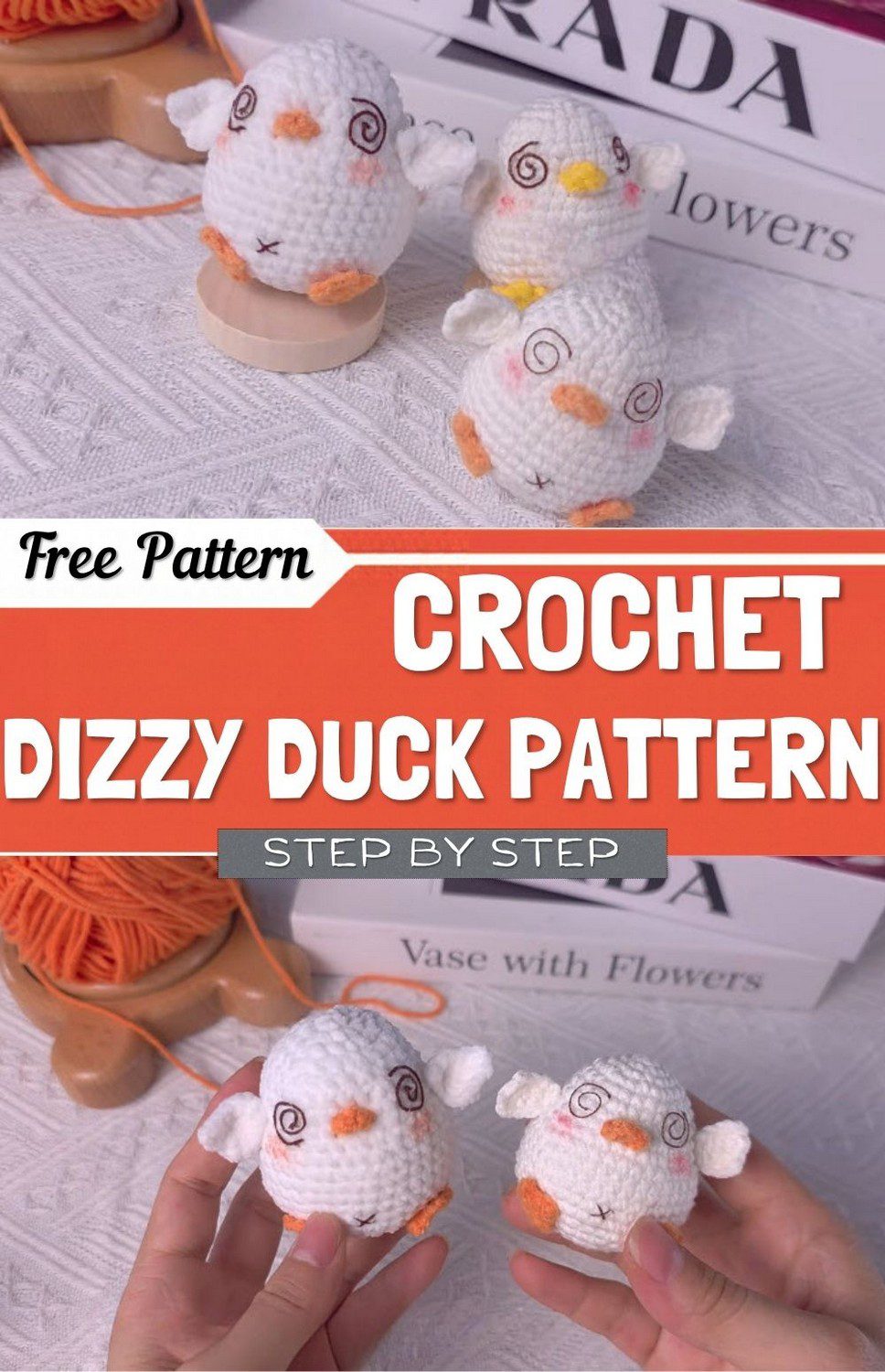
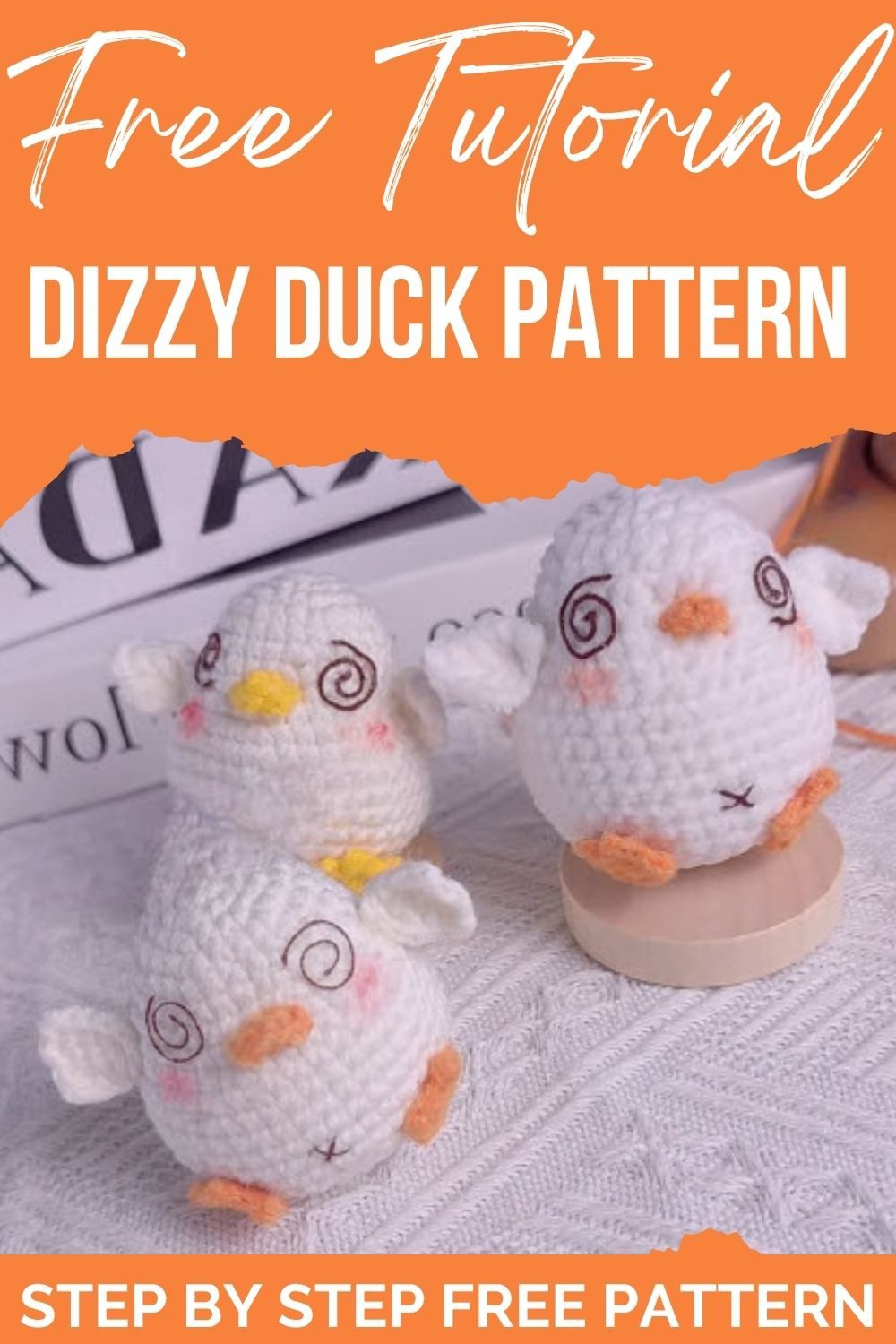
Some amigurumi win you over with fine detail, and this one does it with a goofy face. The dizzy duck has a plump white body, a small orange beak, two stubby wings and a pair of spiral eyes that make it look as if it just spun around too fast.
Worked in light yarn, it looks a lot like a palm-sized crochet chick, so it fits right in with spring projects. If you want a crochet chicken plush that works up quickly, this pattern is a good choice. It uses plain single crochet instead of the bobbles of a puff stitch chick, which keeps every round easy to count.
Chenille gives the duck the soft feel of a velvet yarn chick, while milk cotton makes the stitches look neat and crisp. Tie on a small ribbon or add a keychain ring, and it becomes a sweet crochet chick Easter gift that needs very little wrapping.
The shaping is simple, and the finishing is mostly gluing, so even a first amigurumi can turn out cute. If you have made a crochet ball before, you already know most of what you need.
Project Overview
The duck is worked as one rounded piece, with the head and body forming a single egg shape. Nothing is stitched on separately except the small details: two wings, a beak, a pair of feet and the eyes.
The body is white. The beak and feet are orange, which gives the duck a bright, cartoon look against the plain body. The eyes are spirals, and that is what gives the duck its dizzy personality.
You will need to know:
- How to make a magic ring
- Single crochet and increases
- Invisible decreases
- Half double crochet (for the wings and beak)
- How to stuff and close an amigurumi
Materials
- White yarn for the body. Chenille yarn gives a soft, fluffy duck, while milk cotton yarn gives a smoother, neater stitch.
- Orange yarn for the beak, wings accents and feet, if you want them to match
- Crochet hook suited to your yarn. Choose one a little smaller than the label suggests so the stitches stay tight and the stuffing cannot show through.
- Fiberfill for firm stuffing
- Tapestry needle for closing the body and weaving in ends
- Scissors
- Fabric glue or strong craft glue for the wings, beak, feet and eyes
- Black yarn scraps or a fine black fabric marker for the swirly eyes
A note on yarn size: The finished measurements depend on the yarn and hook you choose. Thicker yarn makes a bigger duck, so pick the weight that suits the size you want. A bulkier yarn is the easiest way to scale the whole project up.
Abbreviations Used (US Terms)
- sc – single crochet
- inc – increase (2 sc in the same stitch)
- dec – invisible decrease
- hdc – half double crochet
- ch – chain
- sl st – slip stitch
Crochet Dizzy Duck Pattern
Before You Start
Work in a continuous spiral without joining rounds. A stitch marker in the first stitch of each round will save you from losing your place, especially in the rounds where you are not changing the stitch count.
Keep your tension snug throughout. Amigurumi stuffing tends to peek through loose stitches, and a duck this pale will show it.
Body
Start with white yarn.
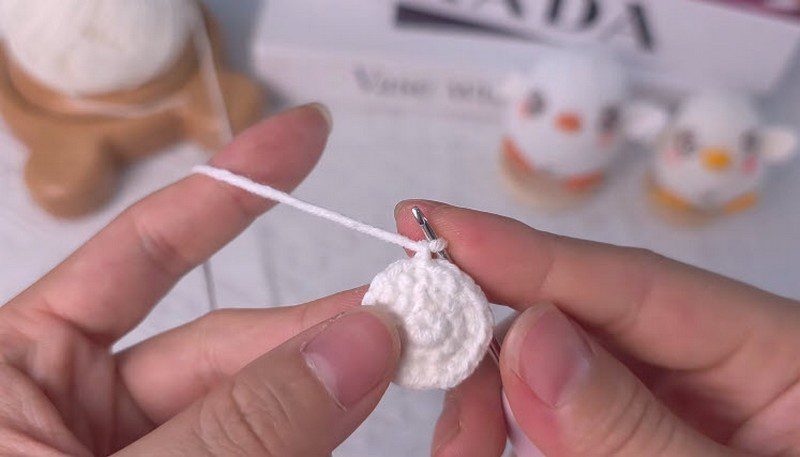
Round 1: Make a magic ring and work 6 sc into it. (6)
Round 2: Inc in each stitch around. (12)
Round 3: (1 sc, inc) repeat 6 times. (18)
Round 4: (1 sc, inc, 1 sc) repeat 6 times. (24)
Round 5: Sc in each stitch around. (24)
Round 6: (3 sc, inc) repeat 6 times. (30)
Rounds 7–8: Sc in each stitch around. (30)
Round 9: (5 sc, inc) repeat 5 times. (35)
Round 10: (3 sc, inc, 3 sc) repeat 5 times. (40)
Rounds 11–15: Sc in each stitch around. (40)
Round 16: (3 sc, dec, 3 sc) repeat 5 times. (35)
Rounds 17–20: Continue decreasing evenly round by round to shape the lower body, and start stuffing firmly as the opening gets smaller.
Round 21: Work 6 dec in a row so the opening is as small as possible.
Before you close up, check the stuffing one last time. The duck should feel plump and firm, with no soft spots or dents. Add small pieces of fiberfill wherever it feels thin.
Cut the yarn, leaving a long tail. Thread it onto your tapestry needle, run it through the remaining stitches, pull tight and weave the end inside the body.
Wings (Make 2)
Chain 5.
Starting in the second chain from the hook, work 1 hdc, then 3 sc across the remaining chains.
Fasten off and leave a short tail. Repeat to make the second wing.
The wings are small and flat on purpose. They sit against the sides of the body like tiny flaps, so there is no need to stuff them.
Beak
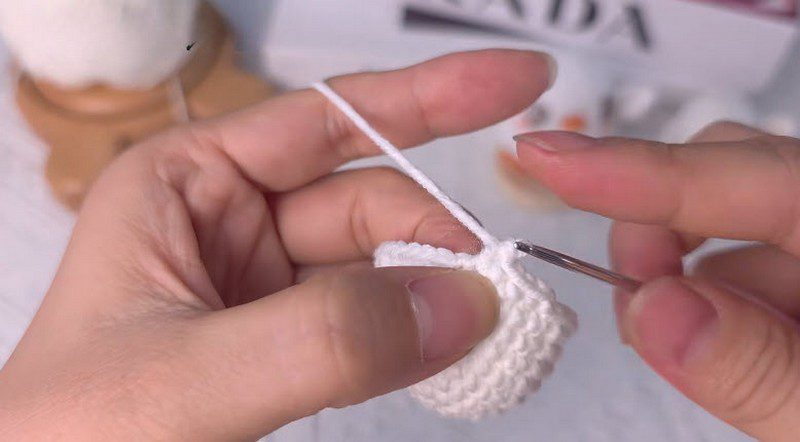
Using orange yarn, chain 4.
Starting in the second chain from the hook, work 1 sc, 1 hdc and 1 sc. Then sl st into the same stitch and fasten off.
The result is a small, slightly curved piece that reads as a beak once it is glued onto the face.
Feet
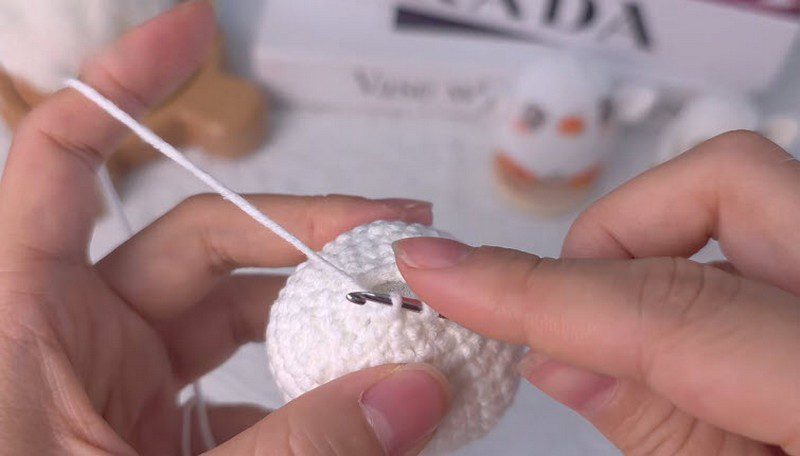
The feet are two small orange pieces attached at the bottom front of the body. If you do not have a favorite foot shape, you can crochet them the same way as the beak, since the size and color already suit the duck. Make two.
Assembly
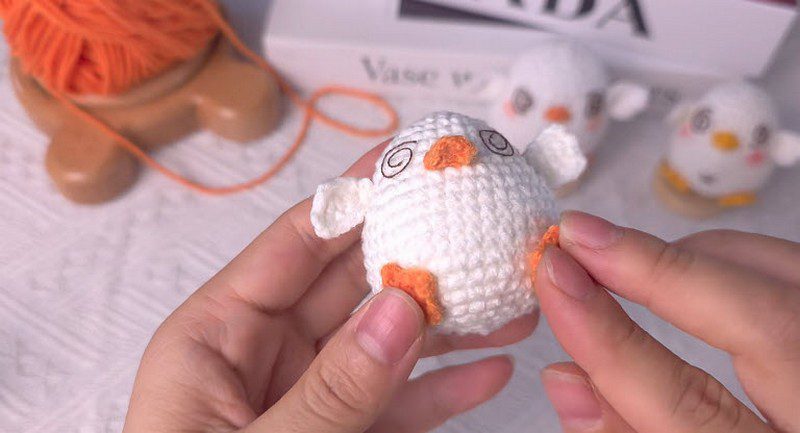
Take your time with this part. Placement is what turns a plain white egg into a character, and a few rows either way will change the expression completely.
Attach the Beak
Glue the beak about 7 rows down from the top of the head. Center it carefully before the glue sets. A beak that leans to one side will make the duck look lopsided rather than dizzy.
Add the Wings
Glue one wing to each side of the body, roughly 6 rows away from the beak. Keep both wings at the same height so they mirror each other.
Press each wing flat against the body for a few seconds so it holds while the glue grips.
Position the Feet
Glue the feet to the lower front of the body, about 4 rows apart. Keep them close to the bottom so the duck sits steadily and the feet peek out from underneath the round belly.
Create the Swirly Eyes
The spiral eyes are what make this duck dizzy, so they deserve a little care.
You have two easy options:
- Yarn eyes: Cut short pieces of black yarn, glue one end in place and coil the yarn outward in a spiral. Hold it for a moment until it sets.
- Drawn eyes: Draw a small spiral with a fine black fabric marker. Practice on a scrap of crocheted fabric first, because ink spreads along fibers more than you would expect.
Place the eyes on either side of the beak, a little above it, with an even gap between them. Slightly wide-set eyes make the face look sillier.
Helpful Tips
Keep the stuffing even. Uneven stuffing is the most common reason an amigurumi looks lumpy. Add the fiberfill in small pieces and push it into the shape rather than packing it in one go.
Mark the start of every round. In the plain rounds, it is very easy to lose count. A marker in the first stitch solves that.
Test the glue first. Some craft glues soak through light yarn and leave a stain. Try a small amount on a scrap first, especially if you are using chenille.
Use a pin check. Before gluing anything, pin the beak, wings and feet in place and look at the duck from a few angles. Moving a pin is easier than peeling off a glued piece.
Stitch counts are your friend. After each increase or decrease round, count the stitches. Catching a mistake early is a lot less frustrating than finding it after stuffing.
Troubleshooting
The duck looks flat instead of round. This is usually a stuffing issue. Open the final stitches before closing, add more fiberfill and shape it with your hands.
Stuffing shows through the stitches. Use a smaller hook or work your stitches a little tighter. Chenille is softer but less forgiving, so pulling your tension tighter helps.
The wings keep falling off. Use a bit more glue and hold the wing in place for longer. You can also stitch the wing on with the leftover yarn tail for extra security.
The face looks off. Peel off the beak or eyes while the glue is still wet and reposition them. A small change in height often fixes the whole expression.
Colour and Yarn Variations
This duck works well with simple changes.
- A classic yellow duckling: Swap the white body for soft yellow and keep the beak and feet orange.
- Pastel set: Make several in pale pink, mint and lavender for a matching group.
- Mixed yarn textures: Use chenille for one duck and milk cotton for another and compare the finish. Chenille gives a plush, huggable look, while milk cotton shows the stitches more clearly.
- Bigger duck: Use bulkier yarn with a larger hook for a toy-sized version. The pattern stays the same, only the finished size changes.
- Different eyes: Try tiny round black beads or flat felt circles if you would rather skip the spirals, although the swirls are what give this duck its character.
Frequently Asked Questions
Can I turn this duck into a keychain?
Yes. The small size makes it a natural keychain. Attach a keychain ring to the top of the head or the back with a few secure stitches before you finish.
Which yarn is better, chenille or milk cotton?
Both work. Chenille is soft and fluffy, while milk cotton gives cleaner stitch definition. Choose based on the look you prefer.
Is this pattern suitable for beginners?
It suits anyone who is comfortable with a magic ring, increases and decreases. The pattern is mostly single crochet, so it is a good project for building confidence with amigurumi shaping.
Do I have to use glue for the small parts?
Glue is the quickest way to place the beak, wings, feet and eyes neatly. If you prefer, you can sew them on with a tapestry needle for a sturdier finish.
Is this safe for small children?
Because the eyes, beak and feet are glued on, the duck is better as a decorative piece or keychain than as a toy for very young children.
Time to Show Off Your Duck
Once the last piece is glued in place, your dizzy duck is ready to sit on a shelf, swing from a bag or keep a desk company. The best part is how much personality comes from such a simple shape.
Make one in classic white, then try a few colors and see how each one changes the mood. A little line-up of dizzy ducks is hard to resist.