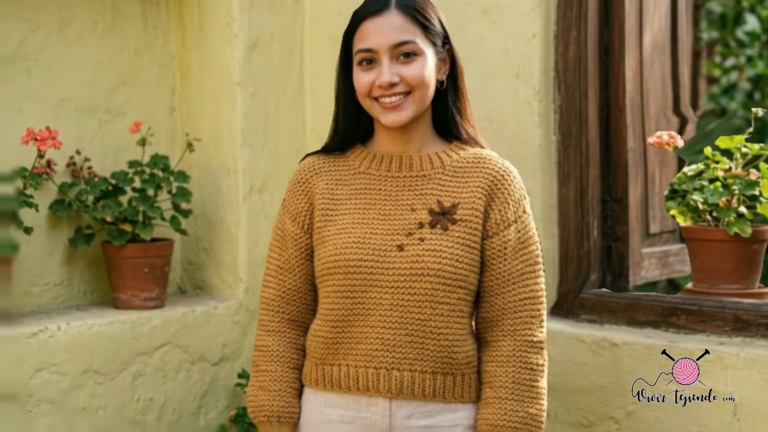
Easy Crochet Knit Sweater Pattern Aurora for Beginners
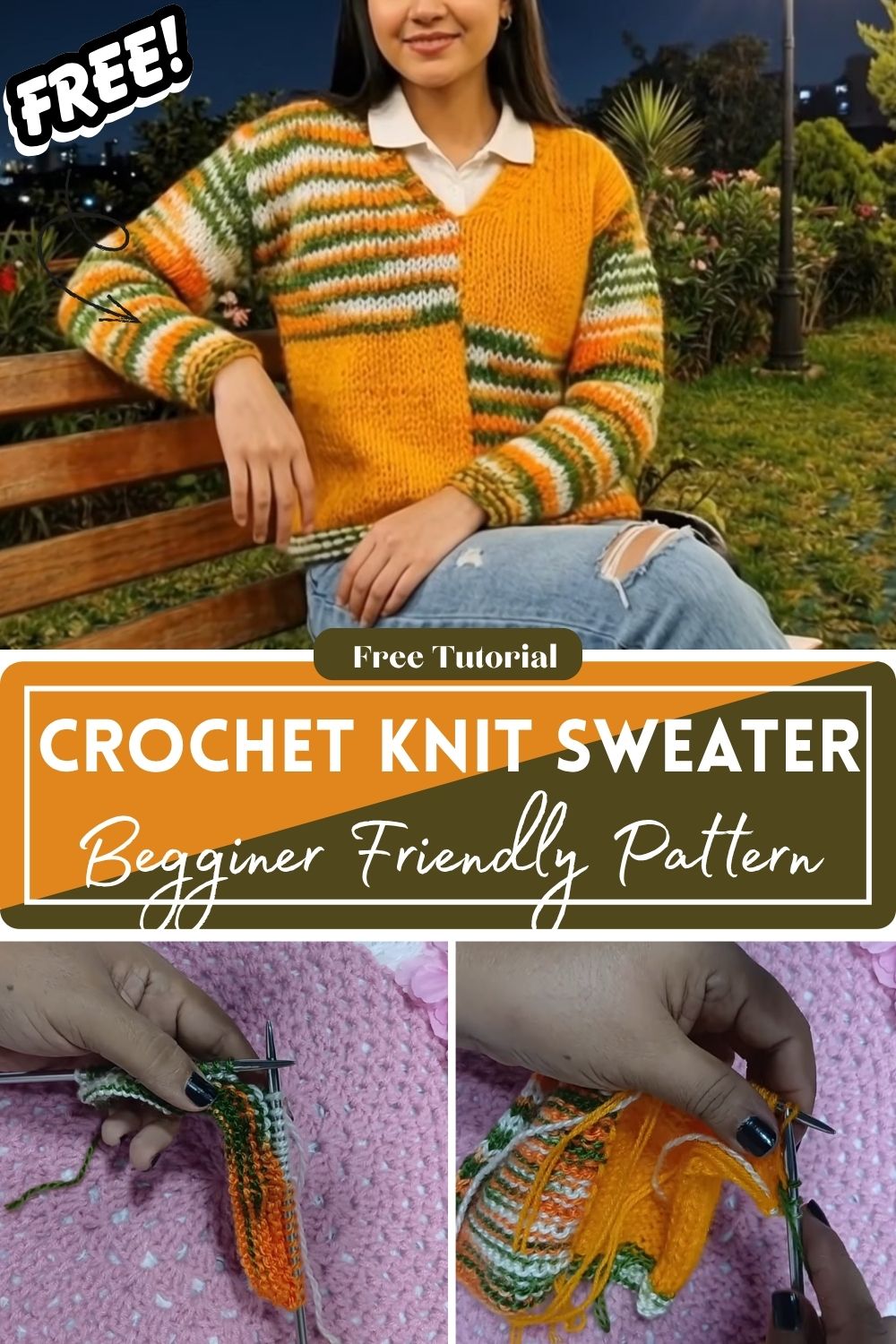
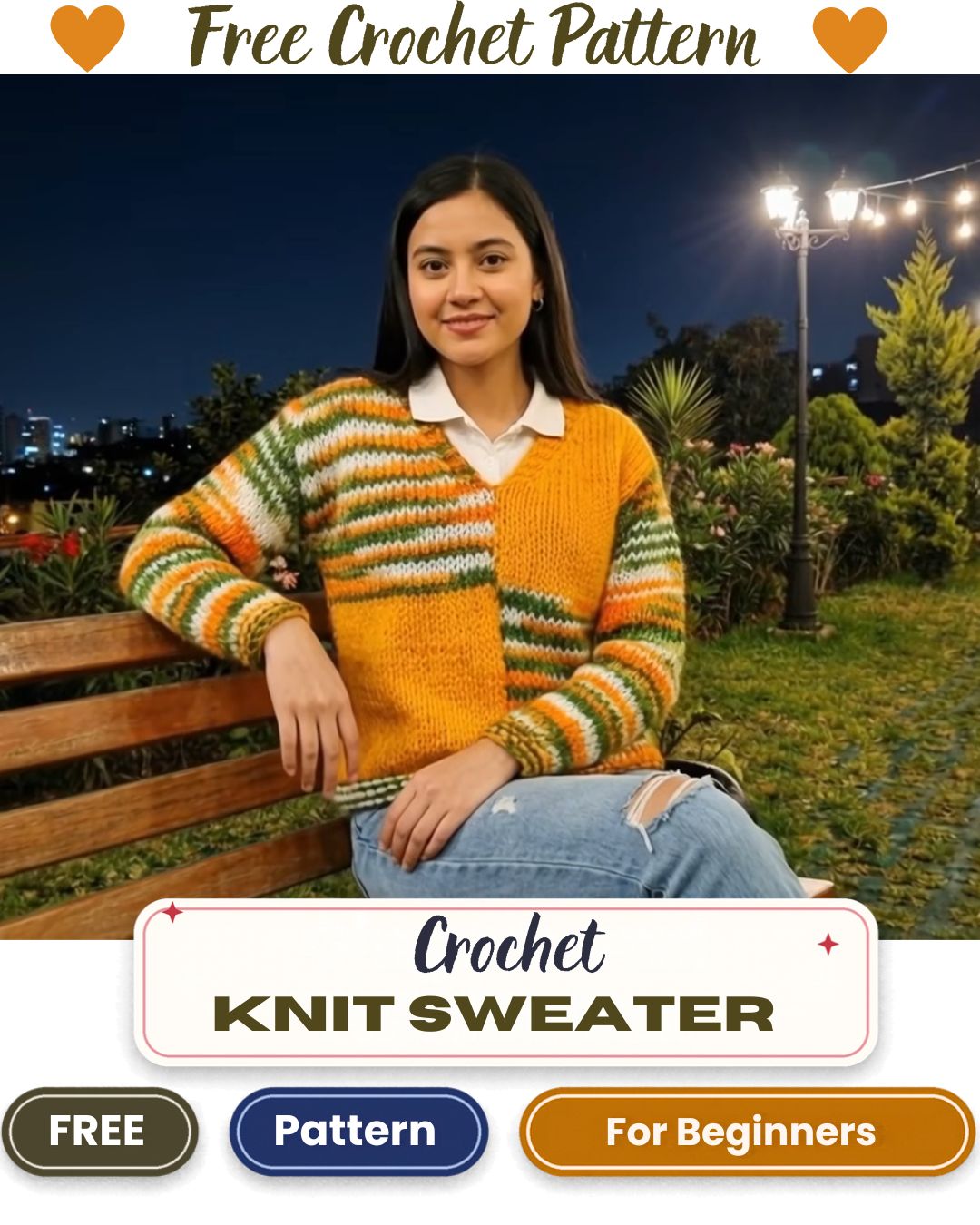
Easy Crochet Knit Sweater Pattern Aurora for Beginners pairs green, orange, and white stripes with a sunny orange body. Stripes run along the sleeves and trim, while smooth panels keep the shape simple. Follow the eight steps below, then use the tips for clean, even results.
Few projects balance color and comfort as well as the Aurora sweater. Wide stripes in forest green, soft white, and bright orange sit beside plain orange panels, so the eye can rest. Because the shaping stays gentle, a first sweater feels within reach. Anyone searching for an easy knit sweater pattern or a beginner striped sweater will find the construction friendly. The finished piece also suits cool evenings at home.
What Do You Need to Make It?
Gather these supplies before casting on the Aurora sweater:
- Yarn: smooth medium-weight yarn in sunny orange for the body, plus a striped skein in green, white, and orange for the sleeves and trim
- Needles: straight or circular knitting needles in the size the yarn label suggests, with stoppers on the ends
- Small tools: a fine hook for catching stray loops, locking stitch markers, and a tapestry needle for tails
- Extras: scissors and a flexible tape measure
What Should You Do Before Starting?
Begin by winding each skein into a loose, center-pull ball so strands never tangle. Next, knit a small swatch in the main stitch and measure it against the yarn label. If the square runs wide, drop down one needle size. Then clip a locking marker to the right side of the fabric, since a clear reference point prevents miscounts later.
How Do You Read This Pattern’s Instructions?
Instructions here use plain words instead of heavy shorthand. Rows are worked back and forth, and one stripe equals a set of rows in a single color. A repeat means working the same short sequence until a section reaches the length needed. Abbreviations stay minimal: K means knit, and P means purl. Whenever a line says to mark, slip a locking marker onto the needle.
How Long Does It Take?
Plan on several relaxed evenings rather than one weekend. Panels move quickly in plain orange, though striped sections slow the pace because colors change often. Sleeves usually take the longest. In general, a steady knitter finishes in about two weeks of short sessions, while a quicker pace trims that time.
What’s the Process Like?
Work these steps in order to finish the Aurora sweater with tidy edges. Each step follows one photo, from first to last.
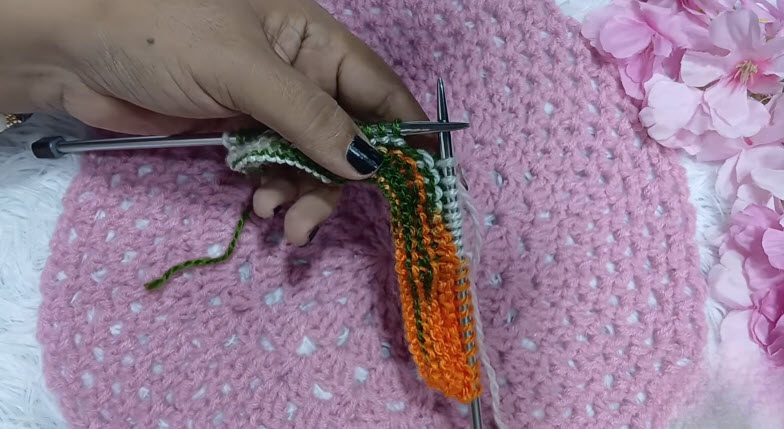
Cast on with the green and white striped yarn. Hold the needle steady and guide the yarn over the index finger. Knit the first few rows so the edge sits firm and flat.

Step 2: Build the striped strip.
Keep knitting as the colors shift from green to white to orange. The strip lengthens and begins to hang from the needle. Meanwhile, let the working yarn trail loosely behind.
Stitch check: the edge looks even, and the stripes repeat in the same color order.
Step 3: Join the orange body panel.
Lay the striped section flat beside the work. Attach the sunny orange yarn and knit the body panel in smooth stockinette, one knit row and one purl row. The striped band stays on the needle along the edge.
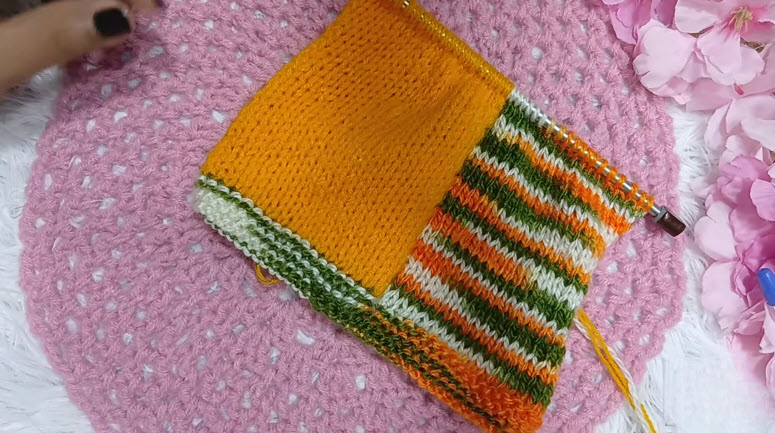
Step 4: Manage the loose strands.
Fold the piece gently to reach the next edge. Orange, white, and green strands will hang at the side. Keep them untangled and clear of the needle tips.

Step 5: Add the connecting stripes. Switch back to the striped yarn and knit the section that links the orange areas. Change colors at the start of a row. The orange ball can wait nearby until needed.
Count now: tally the rows in each stripe band, and make sure matching bands have equal heights.

Step 6: Line up the sections. Continue along the edge until the orange fabric and stripe bands meet at the same height. A soft ridge forms where sections join. Relax your grip there to avoid puckering.
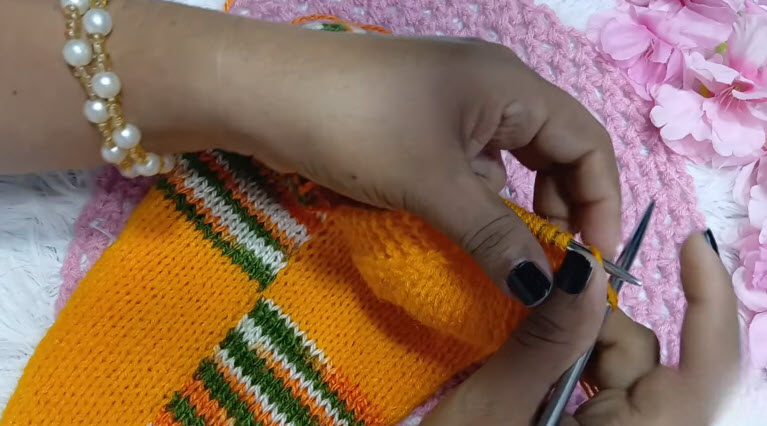
Step 7: Mark and work the ridged rows. Clip a locking marker onto the needle to flag the section’s start. Then work the orange and white ridged rows, changing color at each marked edge.
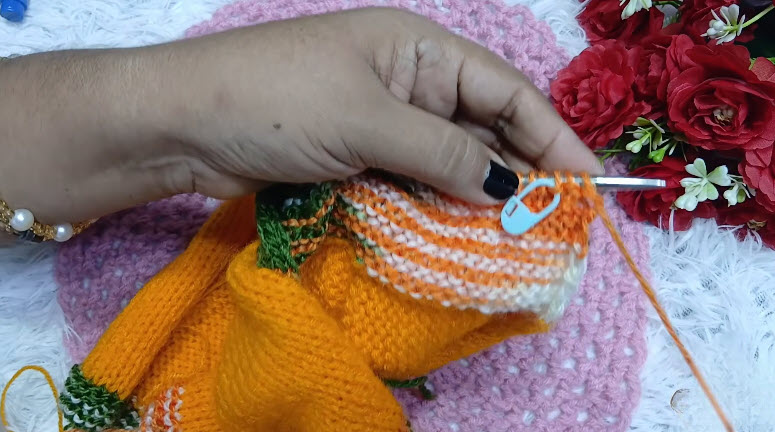
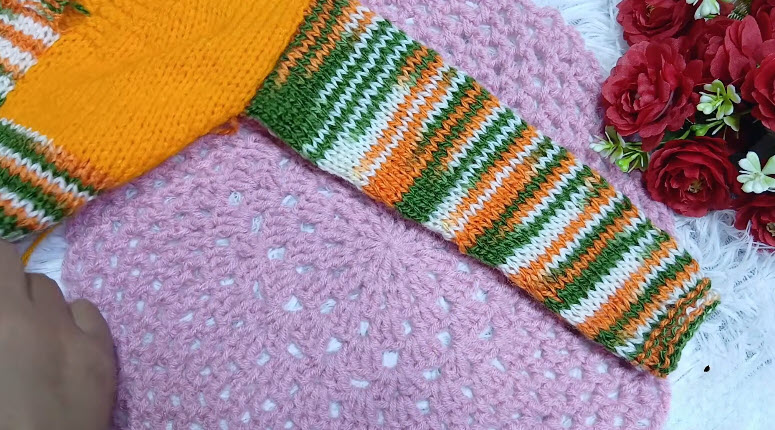
Step 8: Finish the sleeve. Bind off loosely so the ribbed cuff stretches over the hand. Lay the sleeve flat beside the body. Stripes should read evenly from shoulder to cuff.
Before moving on: compare both sleeves side by side, because matching length makes seaming far easier.
What Usually Goes Wrong?
- Tight cast-on edges that pull the trim inward
- Uneven tension between knit rows and purl rows
- Carried strands pulled too snug at color changes
- Lost stripe order after a long break
- Dropped stitches near the needle ends
How Can Mistakes Be Avoided?
Count rows after every stripe, and jot the color order on a sticky note. Keep a fine hook within reach, because it rescues a dropped stitch in seconds. Also, loosen your grip whenever a new color begins. Finally, step away after each finished band and check the fabric in daylight. Small errors show up quickly that way.
What Issues Show Up After It’s Finished?
- Curling edges: steam the borders lightly, then pin them flat until dry.
- Puckered stripe changes: stretch the fabric gently while damp, and loosen carried strands next time.
- Uneven sleeves: wet block both pieces to the same measured length.
- Peeking tails: weave each end through several stitches of its own color.
How Do You Wash and Care for It?
Hand-wash in cool water with a mild, wool-safe soap. Press out moisture with a clean towel instead of wringing. Afterward, dry the sweater flat, away from direct heat. Store it folded in a breathable bag, since hangers stretch shoulders over time.
What Else Can You Make With This Pattern?
Plenty of projects reuse the same striped idea. Readers who enjoy this style can browse the striped baby cardigan post for a smaller version. For extra warmth, the matching striped beanie tutorial follows the same color order. Finally, a striped scarf guide uses up leftover yarn nicely.
Is It a Good Project for Beginners?
Yes, once a few basics feel comfortable. The Aurora sweater relies on knit and purl rows, simple color changes, and flat panels. Because no lace or cables appear, mistakes stay easy to spot. However, new makers should swatch first, since tension control matters most. A short break after each stripe also keeps hands relaxed.
Why Are People Making This Right Now?
Autumn pulls makers toward warm, wearable projects. Bright stripes also photograph well, so finished pieces travel fast across social feeds.
- Leftover yarn finds a purpose in the striped sections.
- Progress shows every few rows, which keeps motivation high.
- Plain panels offer a rest between color changes.
A Bright Stripe Worth Starting Today
Color, calm panels, and steady steps make a satisfying first sweater. Choose sunny orange, add forest green and white, then let each stripe set the pace. With patient counting and a light touch, the Aurora sweater becomes a piece to enjoy for many cool seasons.
FAQ
What yarn weight suits the stripes best?
Smooth medium-weight yarn shows stitch definition and keeps stripe edges crisp.
Can leftover yarn work for the stripes?
Yes, provided the fiber type matches. Mixed fibers can wash and stretch differently.
How can fit be checked mid-project?
Lay the panel over a sweater that already fits well. Compare width and length before continuing.
Does a hook help in a needle-worked project?
Absolutely. A small hook fixes dropped stitches and neatens edges during assembly.
Which Color Combinations Work Beyond Green, Orange, and White?
Navy, cream, and rust create a calm, earthy look. Soft pink, gray, and mint suit a gentler style. For bold contrast, try teal with mustard. Whichever mix appeals, keep one plain color for the body so the stripes stay the focus.