Crochet Wave Halter Top Pattern for Cozy Evenings
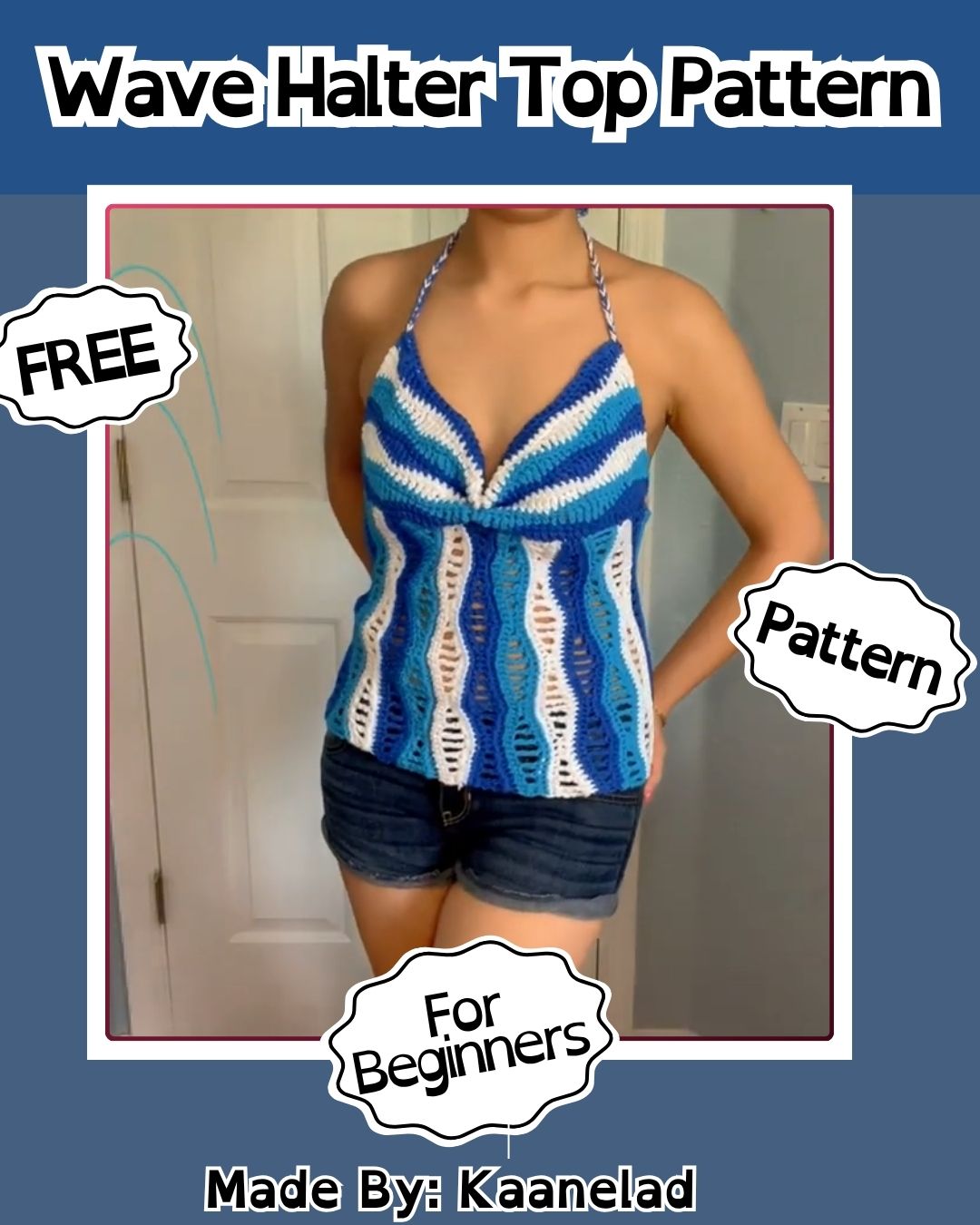
Rich blue tones ripple into soft waves in the Crochet Wave Halter Top Pattern for Cozy Evenings, a striped crochet halter top that turns simple color changes into a genuinely eye-catching finished piece.
What makes this halter top special is its layered wave-like color pattern, built by switching shades as you work each row, giving the fabric real movement and depth instead of a flat, single-tone look. The piece begins from a small motif base, grows through rows of color-blended stitches, and finishes with a joining border that ties the wave stripes together into a cohesive halter top pattern. It’s a lovely way to practice color changes while making something wearable for cool evening outings, beach cover-ups, or adding a distinctive statement piece to a summer wardrobe.

Pattern Overview
- Each panel starts from a small triangle or fan-shaped motif base
- Rows build outward, switching between shades of blue, turquoise, and white
- Color changes create a soft wave effect across the fabric
- A finishing border joins the layered rows and neatens the edges
- Panels are joined together to complete the halter silhouette
- Straps are worked or attached once the main panels are finished
Special Techniques
- Starting stitch/foundation ring
- Single crochet and double crochet combination
- Color-change technique for the wave effect
- Border/edging round for joining and shaping
- Weaving in multiple color ends neatly
Skill Level
This pattern suits confident beginners and intermediate crocheters who are comfortable switching yarn colors mid-row. The stitches themselves stay simple, so the color-change technique is the main new skill here.
Common Mistakes
- Switching colors too loosely, leaving visible gaps at the color-change point
- Losing track of the row count while focused on the color pattern
- Mixing yarn weights between colors, which throws off the wave shape
- Skipping a stitch marker and misjudging where each new shade should start
- Weaving in color ends too quickly, leaving them loose after a few wears
Uses & Benefits
- Keep your tension even, especially right at each color-change row
- Use a stitch marker to track row starts as colors shift across the panel
- Carry unused colors loosely along the edge to avoid tangling as you switch
- Weave in every color change securely so the wave pattern holds up over time
- Lay panels side by side often to keep both halves matching in size
Assembly
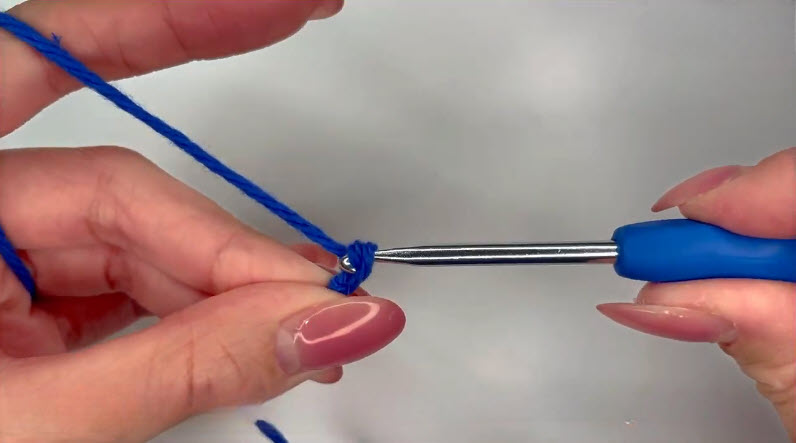
- Step 1: Begin with a starting loop on your hook, holding the working yarn firmly as you prepare the first stitches of your base motif.
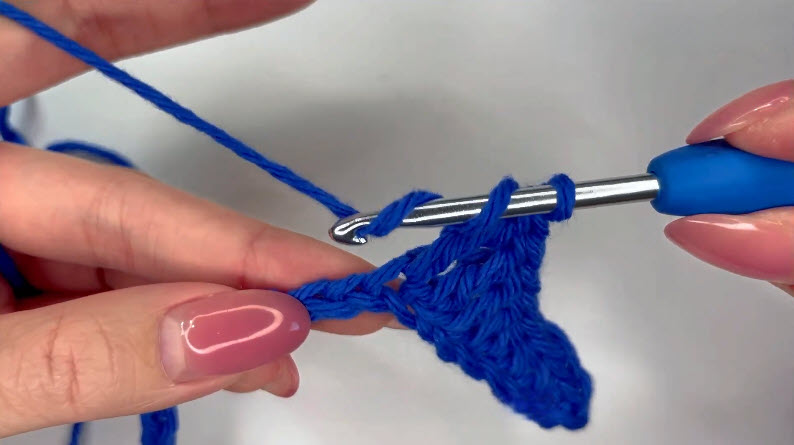
- Step 2: Work the first rounds into the base, shaping the small triangle motif that will anchor the rest of the panel.
- Step 3: Continue in rows, switching to a new shade of blue as you build upward, letting the color change form the first wave stripe.
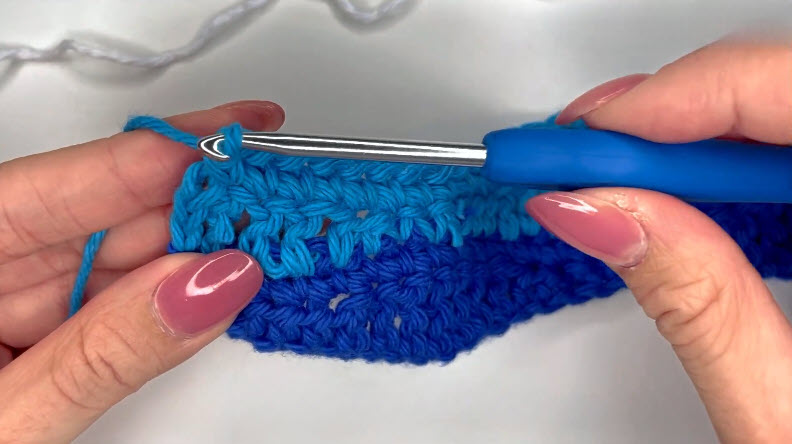
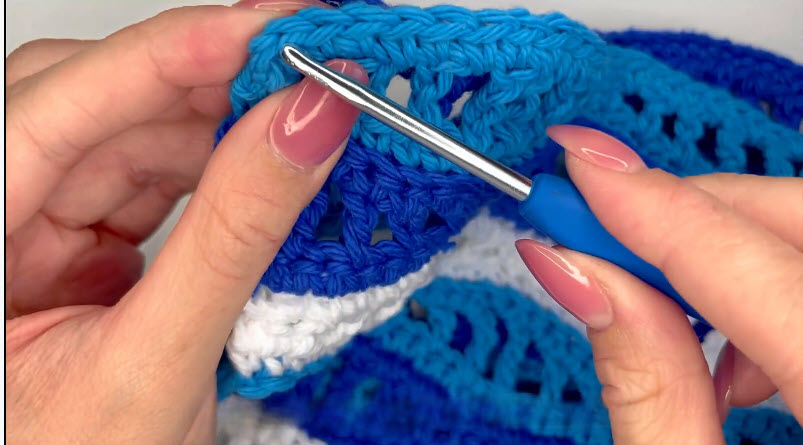
- Step 4: Work a finishing border across the layered color rows, joining the stripes neatly and shaping the edge where the panel meets the next section.
Where Can You Use This?
Beyond cozy evenings out, this pattern also works well as a festival top, a colorful layering piece under a cardigan, or a fun handmade item for a crochet shop’s fall or spring lineup.
Why Beginners Will Enjoy This Pattern
Because the stitch pattern stays simple throughout, beginners can focus entirely on learning clean color changes, which makes this a rewarding first project for anyone curious about colorwork crochet.
Tips and Tricks for Success
- Pick three to four shades in the same color family for the smoothest wave effect
- Try a lightweight yarn so the finished top drapes softly instead of feeling stiff
- Keep a consistent hook size throughout to avoid uneven tension between color sections
- Block the finished panels gently to help the wave stripes lie flat and even
Why This Crochet Pattern Is Trending
Ombre and wave-style colorwork has been gaining popularity in the crochet community, since it delivers a striking visual effect without requiring complex stitch patterns or advanced techniques.
- The wave effect makes even simple stitches look intricate and eye-catching
- It’s an easy way to repurpose leftover yarn in coordinating shades
- Color-blocked halter tops photograph beautifully for handmade shop listings
Design Customization Ideas
Playing with Color
Swap the blue tones for a sunset palette of orange, pink, and yellow, or keep it monochrome with different shades of a single color for a subtler wave.
Adding Accessories
A thin tie or small button closure at the neckline adds a functional and decorative touch to the finished halter top.
Mini and Layered Variations
Shorten the panels for a cropped bralette version, or add an extra row of stripes for a slightly longer, more coverage-friendly top.
FAQ
What is the best yarn for a crochet wave halter top like this?
A soft, lightweight cotton or cotton-blend yarn works best, since it holds color changes crisply and gives the finished top a comfortable, breathable drape.
How do I keep the color changes looking clean and neat?
Switch colors at the last yarn-over of the final stitch in the old color, keep tension consistent, and weave in ends securely as you go rather than leaving them for later.
How long does this project take to finish?
Most crocheters finish both panels and the joining border over a weekend, though the exact time depends on how many color changes are included.