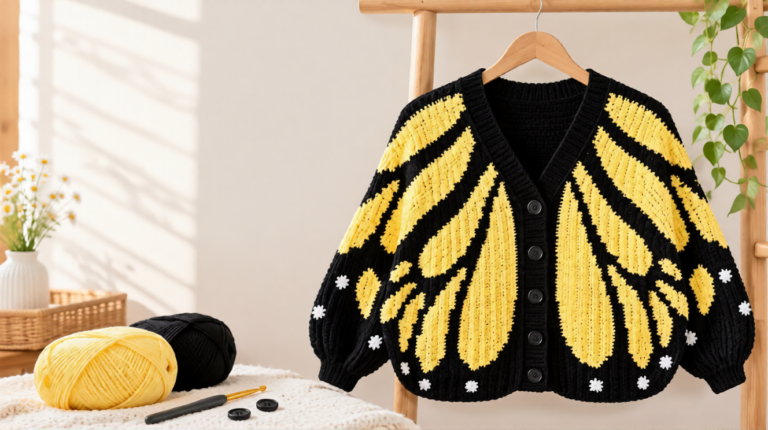
Crochet Hexagon Cardigan in Mustard and Brown
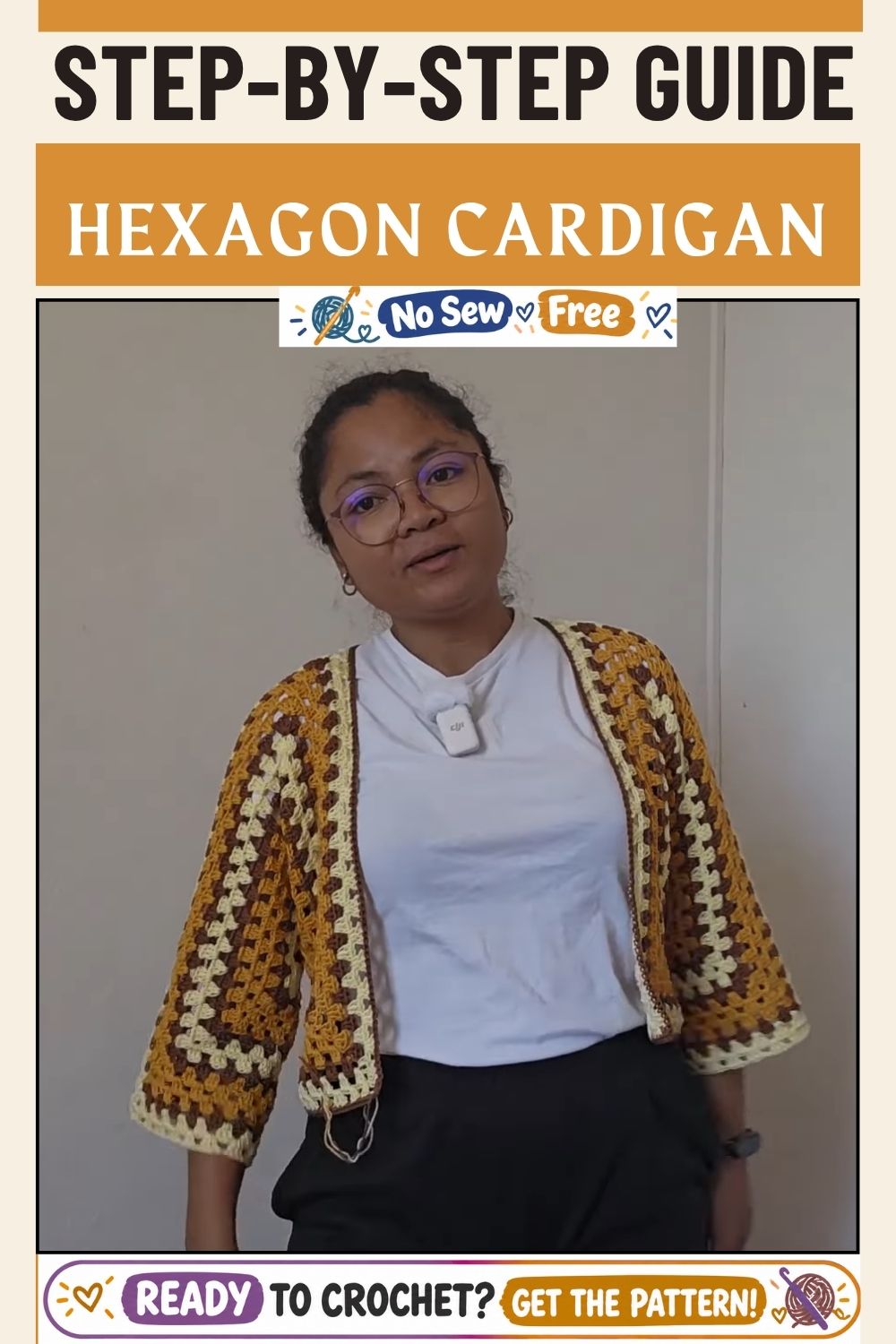
Mustard, chocolate brown, and soft cream come together in this crochet hexagon cardigan. Granny clusters make up the fabric, two large hexagons form the body, and warm stripes give the whole piece a vintage feel. The repeats are simple, so the stitching stays relaxed from start to finish.
A granny hexagon cardigan needs very little seaming, which means you reach the finished garment sooner than with most wearable projects. The mustard and brown hexi cardi palette also pairs easily with plain tees and dresses, and the cream trim softens the contrast. It suits cool evenings, coffee runs, and weekend trips.

What You Need for a Crochet Hexagon Cardigan
Gather these supplies before the first stitch:
- Smooth cotton or cotton-blend yarn in a DK weight: mustard, chocolate brown, and cream
- Extra cream yarn for the borders, since edging rounds use more than you might expect
- A slim metal hook sized to the yarn label (3.5 to 4.5 mm suits most DK cotton)
- Locking stitch markers
- A tapestry needle for weaving in tails
- A measuring tape and sharp scissors
Prep Steps Before You Start the Hexagon Cardigan
Wind each skein into a loose center-pull ball so the yarn feeds smoothly. Then crochet a small granny swatch and compare it with the body width you plan to make. If the swatch feels tight, go up a hook size. Finally, clip a marker into the first space of each round. These small habits prevent distorted hexagons and save you from unraveling later.
How to Read This Granny Hexagon Pattern
The instructions use US terms. Ch means chain, sl st means slip stitch, and dc means double crochet. A granny cluster is three dc worked into one space. Asterisks mark a repeat, so work the section between them as many times as the pattern says. Rounds grow outward from the center, and each round closes with a slip stitch.
How Long Does a Crochet Hexagon Cardigan Take?
Most crocheters need roughly 25 to 40 hours, depending on yarn weight and hook size. The middle rounds go quickly because granny clusters are fast to work. The outer rounds are much longer, so each one takes noticeably more time. Short daily sessions keep the pace steady. At two rounds per evening, you could reach the border stage within a few weeks.
Step-by-Step Crochet Hexagon Cardigan Tutorial
These steps cover the cream border worked around the finished mustard-and-brown section. Follow the video above if you want to see each move in action.
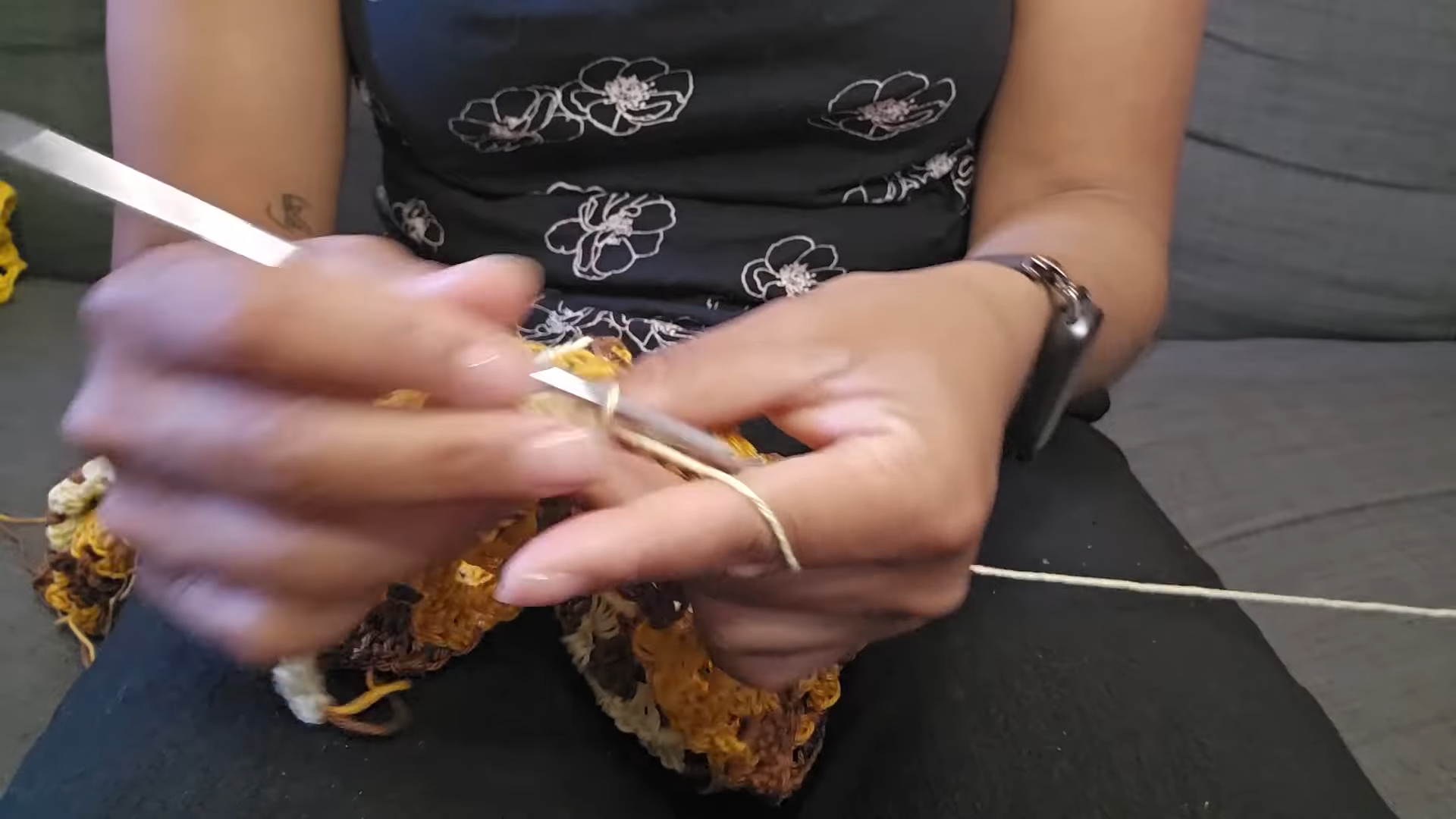
Step 1: Join the Cream Yarn
Attach the cream yarn to the outer edge of the finished mustard-and-brown section. Loop the working yarn around your index finger. Slide the hook under the first space, pull up a loop, and chain to secure the start.
Step 2: Begin the Cream Round
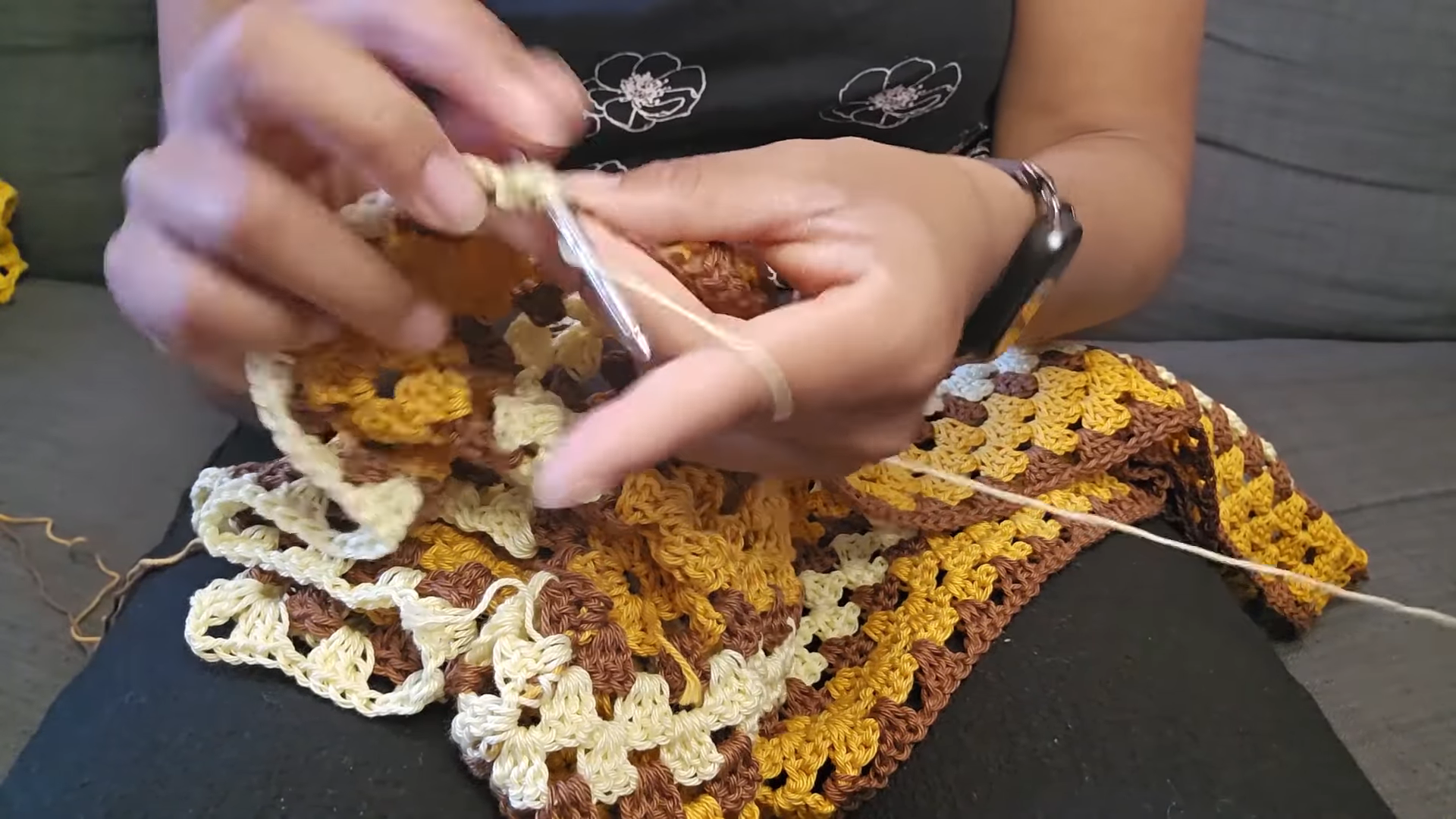
Work three double crochets into each space along the edge. Turn the fabric as you go so the active edge always faces up. Keep one chain between clusters to hold the open, airy texture.
Stitch check: Every cluster should show three even double crochets with a single chain gap between them. Uneven gaps usually mean a skipped space.
Step 3: Keep Your Tension Steady
Hold the fabric close to the hook and lift the yarn with your finger at a relaxed height. Match each cluster’s height to the earlier rounds, and pause every few clusters to smooth the fabric flat.
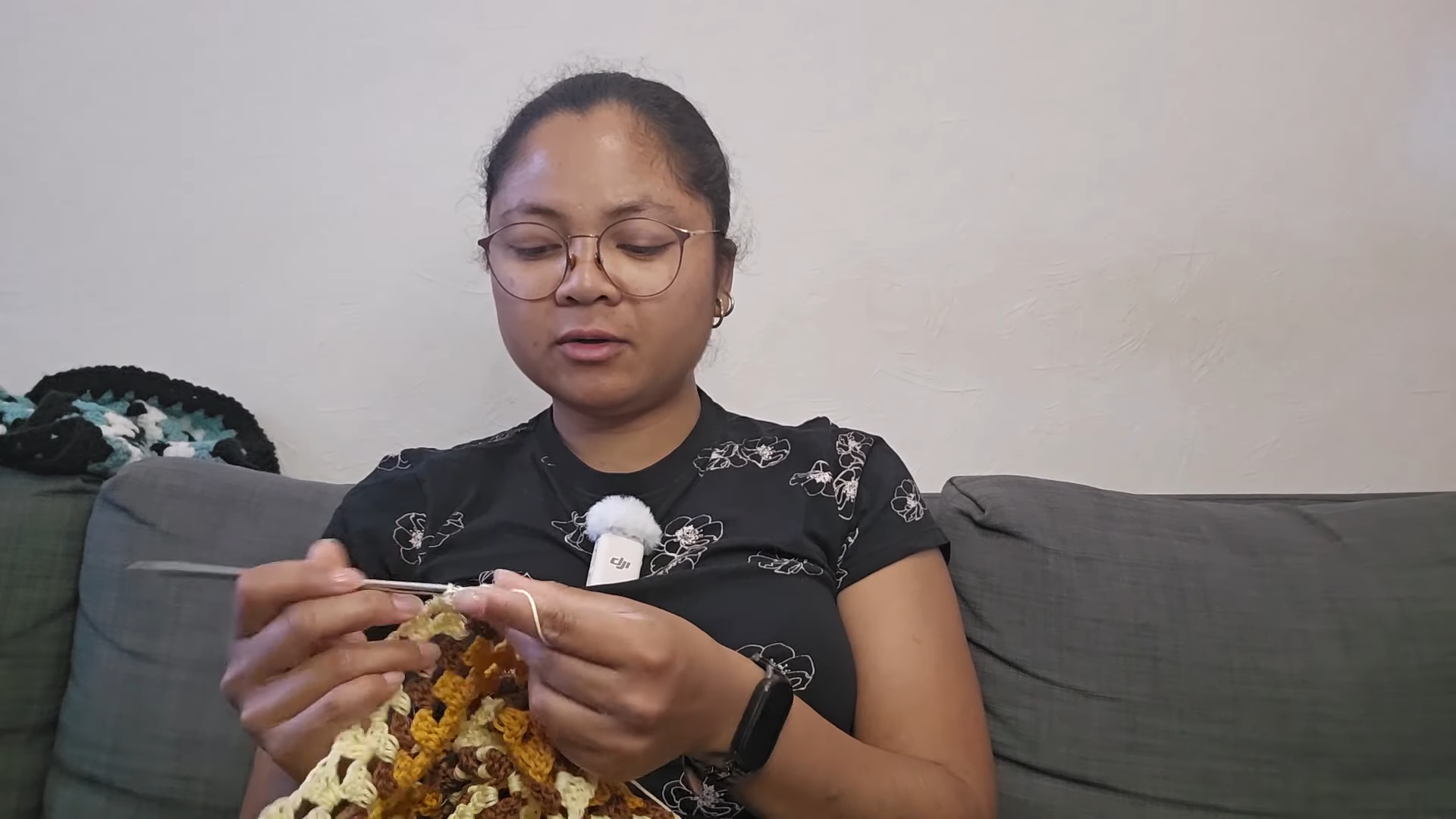
Step 4: Enter Each Space Cleanly
Aim the hook into the chain space below, not between the stitches. Yarn over, pull through, and complete the cluster. Then move to the next space without twisting the fabric.
Count now: Tally the clusters on each side of the hexagon. Matching counts on all six sides keep the shape balanced.
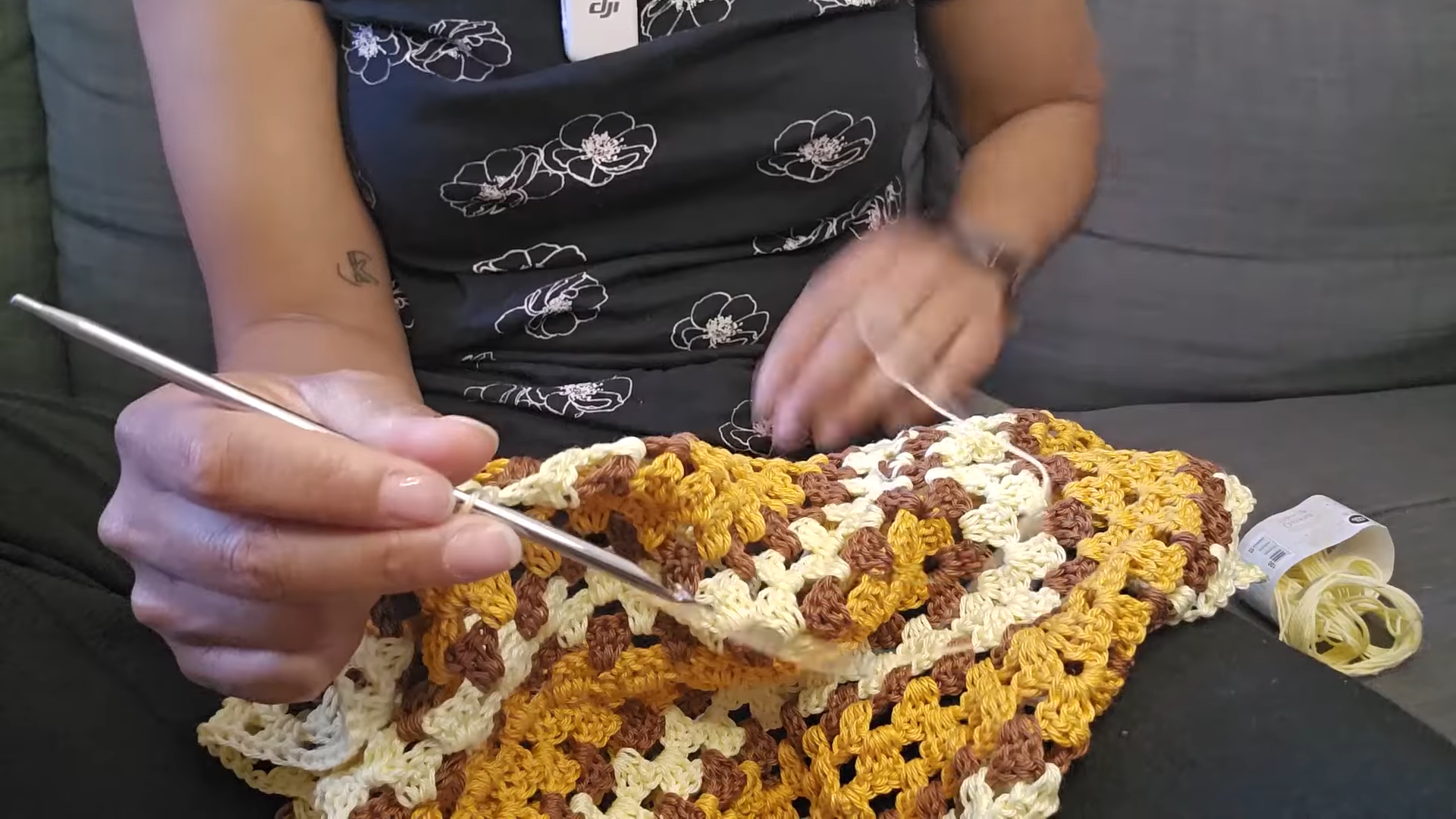
Step 5: Add the Chain-Loop Edge
Finish with a lacy cream round. Chain a short loop, skip a space, then slip stitch into the next space. Repeat around the whole edge for a soft, scalloped look.
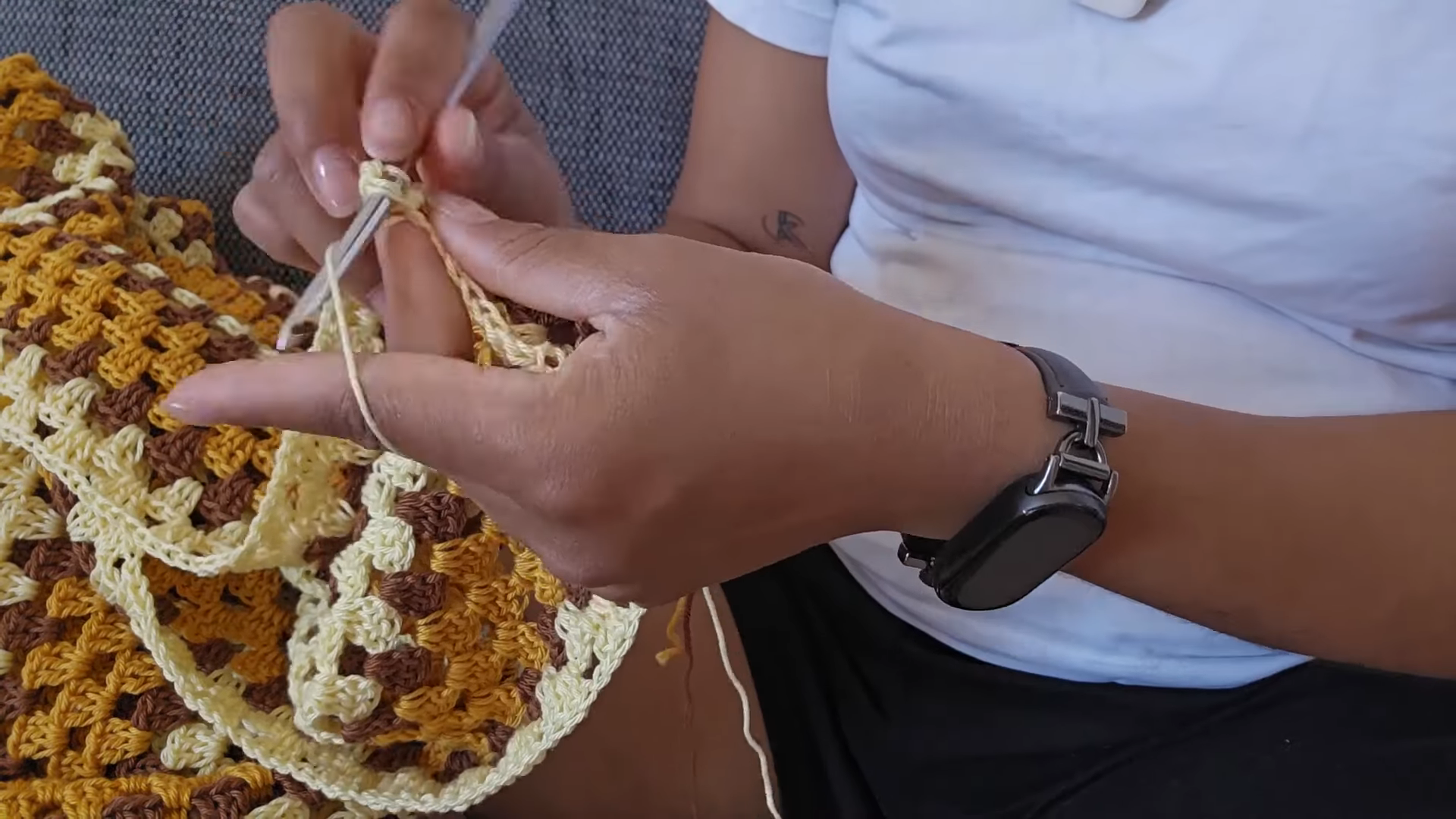
Step 6: Check the Fit and Finish
Once the border closes, hold the body against your shoulders and arms. It should drape loosely, with the sleeves landing near the elbow. If the width feels narrow, add one more round of clusters before fastening off. Then weave in every tail with the tapestry needle.
Before moving on: Fold the body along the planned shoulder line. Both halves should match edge to edge, with the stripes meeting at the same color.
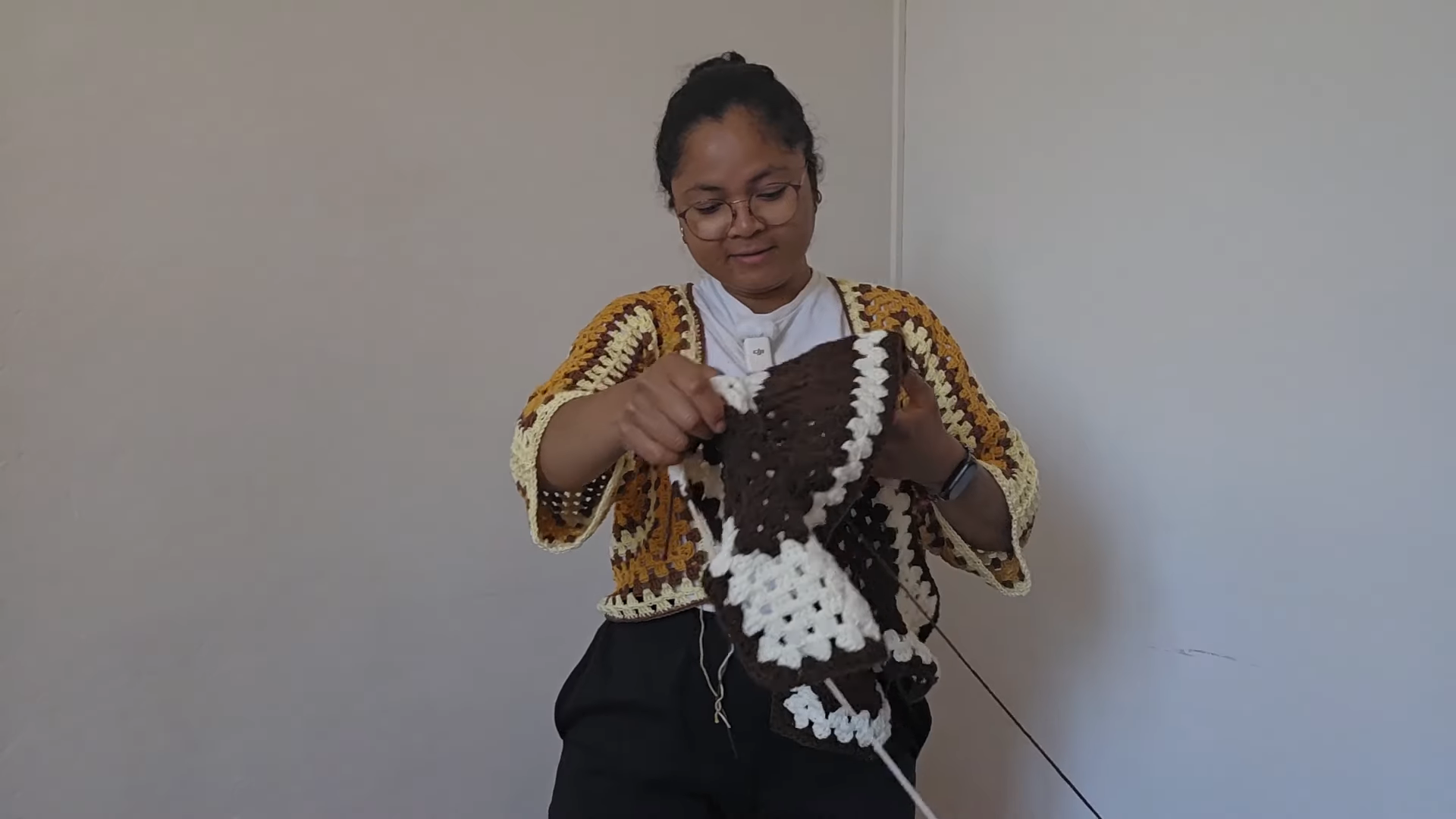
Common Problems When Crocheting a Hexagon Cardigan
- Skipped spaces create small holes and uneven edges.
- Tight turning chains pull the corners inward.
- The stripe order drifts when a color change happens in the wrong round.
- Yarn runs out in the middle of a long outer round.
- The fabric cups instead of lying flat.
How to Avoid These Mistakes
- Count the clusters at the end of every round and compare against your marker.
- Chain loosely and relax your grip on the hook.
- Write the stripe order on paper and tick off each round.
- Keep one spare skein of each color before starting the borders.
- Switch to a larger hook for the outer rounds, since the fabric needs extra stretch there.
Fixing Problems After the Cardigan Is Finished
- Ruffled edges: Steam block gently, then use a lighter hook for borders next time.
- Sagging body: The weight hangs unevenly when stored on a hanger, so fold and store the piece flat.
- Stretched sleeves: Dampen the cuffs, shape them by hand, and dry them flat.
- Color bleed: Rinse in cool water, and wash dark and light sections separately next time.
- Curling front edges: Add a round of single crochet along the opening to steady the fabric.
How to Wash and Care for Your Crochet Hexagon Cardigan
Cotton does best with gentle handling. Fill a basin with cool water and a mild detergent, then press the cardigan under the surface without wringing it. Rinse until the water runs clear. Roll the piece in a towel to absorb moisture, then lay it flat and reshape the hexagons by hand. Direct sun can fade mustard shades, so dry it in a shaded spot.
Color Planning for Mustard and Brown Stripes
Plan the palette before the first round. Stripes look polished when the sequence repeats on purpose. Here is one way to set it up:
- Alternate two rounds of mustard with one round of brown.
- Add a cream round every fourth stripe for a bright break.
- Keep the deepest browns near the center, where the eye lands first.
- Finish with cream so the border frames the whole piece.
Bonus: How to Style a Hexagon Cardigan
The warm palette works with plenty of everyday outfits:
- Wear it open over a plain white or cream tee.
- Layer it over a simple dress for cooler evenings.
- Pair it with denim, since mustard and brown both sit well with blue.
- Keep jewelry minimal so the hexagons stay the focus.
More Granny Hexagon Projects to Try
The same granny clusters work for other projects. If you enjoy this style, try a granny hexagon tote, a set of hexagon motif coasters, or a granny stripe shawl. To compare construction methods, a granny square cardigan is a good next read.
Is This Hexagon Cardigan Good for Beginners?
Yes, with one condition. Chains, slip stitches, and double crochets cover nearly every motion, so anyone comfortable with granny squares can handle the hexagon shape. The size does ask for patience, though. Start with a small swatch, track each round with markers, and take a break whenever the counts feel unclear.
Why the Crochet Hexagon Cardigan Is So Popular
Vintage colour stories are back, and earthy shades lead the trend. Layered, relaxed clothing also suits cooler weather, and a hexagon cardigan is a good way to use up leftover yarn.
- Retro 1970s palettes feel fresh again.
- Minimal seaming keeps the process approachable.
- Stripe combinations leave room for personal colour choices.
Crochet Hexagon Cardigan FAQ
Which hook size suits DK cotton?
A hook between 3.5 and 4.5 mm usually works. Swatch first, since tension varies from hand to hand.
Can the length be adjusted?
Yes. Add extra rounds of granny clusters to lengthen the body and widen it evenly.
How much yarn does a full cardigan need?
The amount depends on size and yarn weight. Buy one extra skein of each color to cover the border rounds.
Do the stripes need to follow one order?
No. You can rotate colors freely, although a repeating sequence gives a cleaner, more balanced look.
Is blocking necessary?
Light blocking helps the hexagons relax and lie flat. Cotton responds well to damp, gentle shaping.
Where the Last Stitch Leads
Cool days are a great excuse to wear something soft and sunny. Mustard brings the glow, brown anchors the design, and cream ties it together. Once you’ve woven in the last tail, slip the piece over a favorite tee and enjoy your new crochet hexagon cardigan.